Single Needle vs Multi Needle Embroidery Machine: Which Is Right for You?
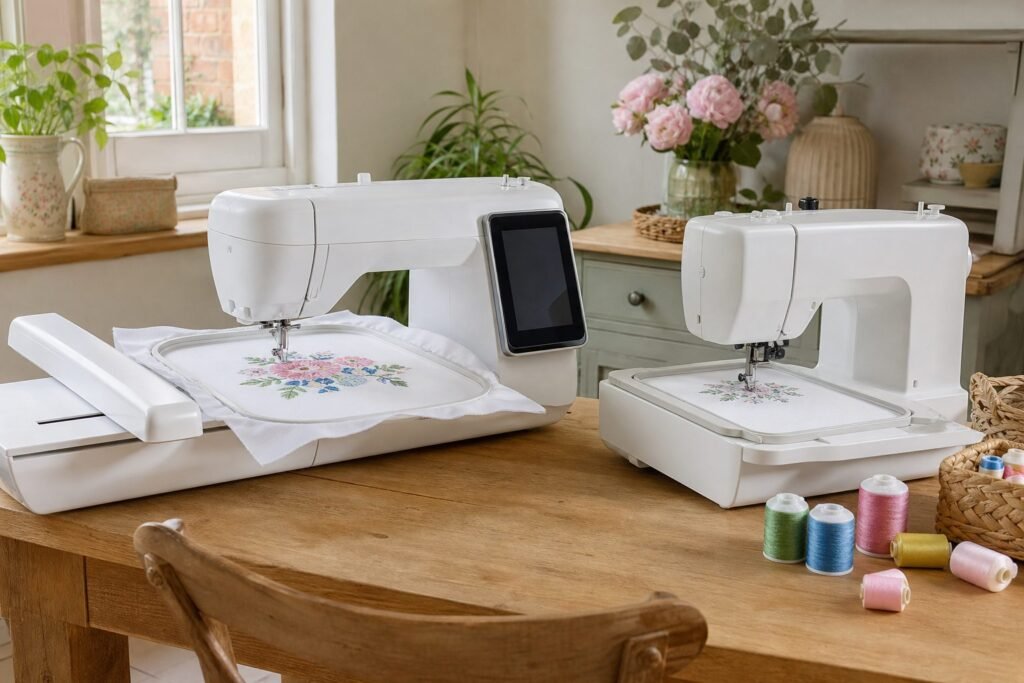
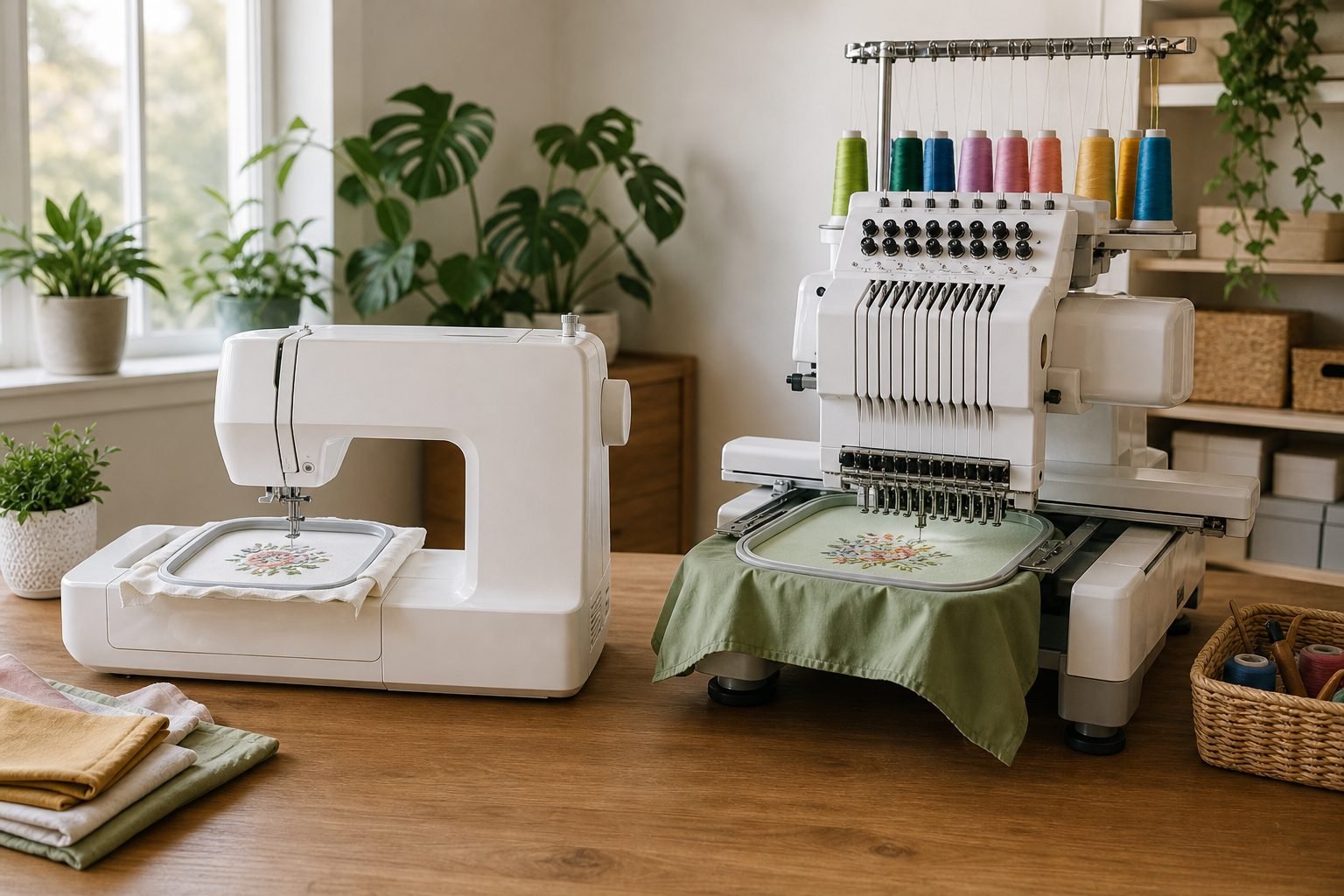
Choosing between a single needle vs multi needle embroidery machine depends on how many colours you stitch, what items you embroider and whether you sell your work.
This guide compares colour changes, speed, hoop size, hats and bags, space and running costs in plain terms, so you can pick the machine that suits your projects.
- How each machine type works
- Colour changes, speed and hoop size
- Hobby use vs small business
- Seven tips to help you choose
The short answer
- Single needle for hobby work A single needle machine suits occasional, personal projects, flat items and tight spaces.
- Multi needle for volume A multi-needle machine changes colours by itself, so it saves the most time on multi-colour designs and repeat runs.
- Free arm opens new items Most multi-needle machines have a free arm and accept cap frames, which makes hats, bags and sleeves practical.
- Stitch quality is similar Hooping, stabiliser, thread and the design file matter more to quality than the number of needles.
The single needle vs multi needle embroidery machine choice is less about stitch quality and more about workflow: how often you change colours, what you want to stitch on, and how many pieces you make each week. Both types stitch from the same kind of digital design file, and both rely on good hooping and the right stabiliser. What changes is how much of your time the machine needs while it works.
This guide explains how each type works, compares them point by point, and helps you decide whether a home hobby machine is enough or whether a multi-needle model would pay its way. If you are still deciding between a sewing and embroidery combo and an embroidery-only machine, start with our guide to embroidery-only machines vs combos, then come back here.
What is a single needle embroidery machine?
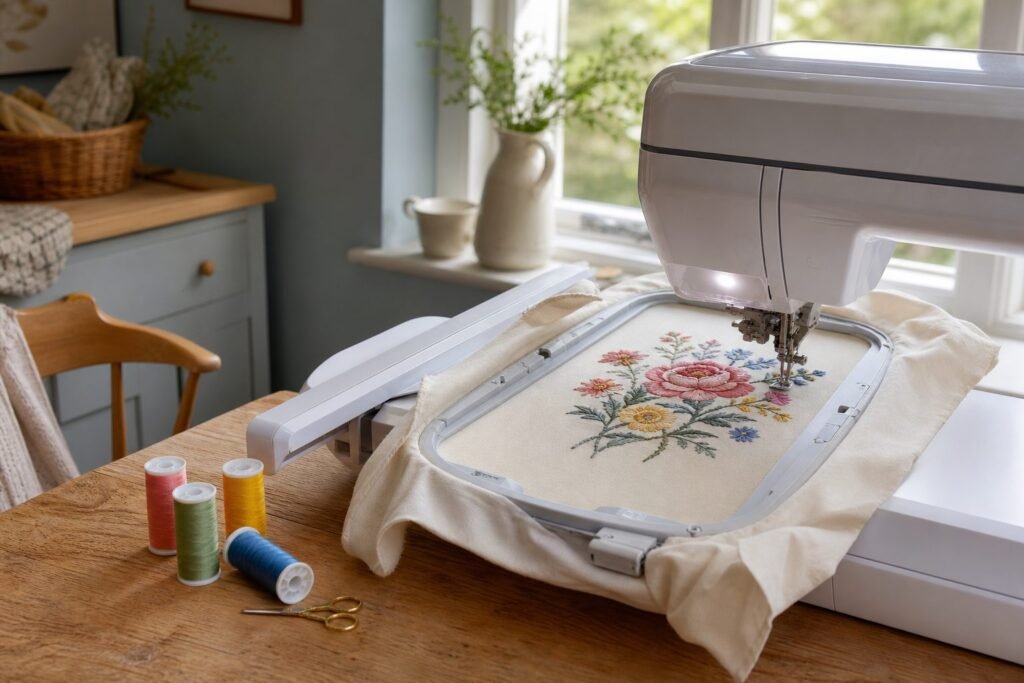
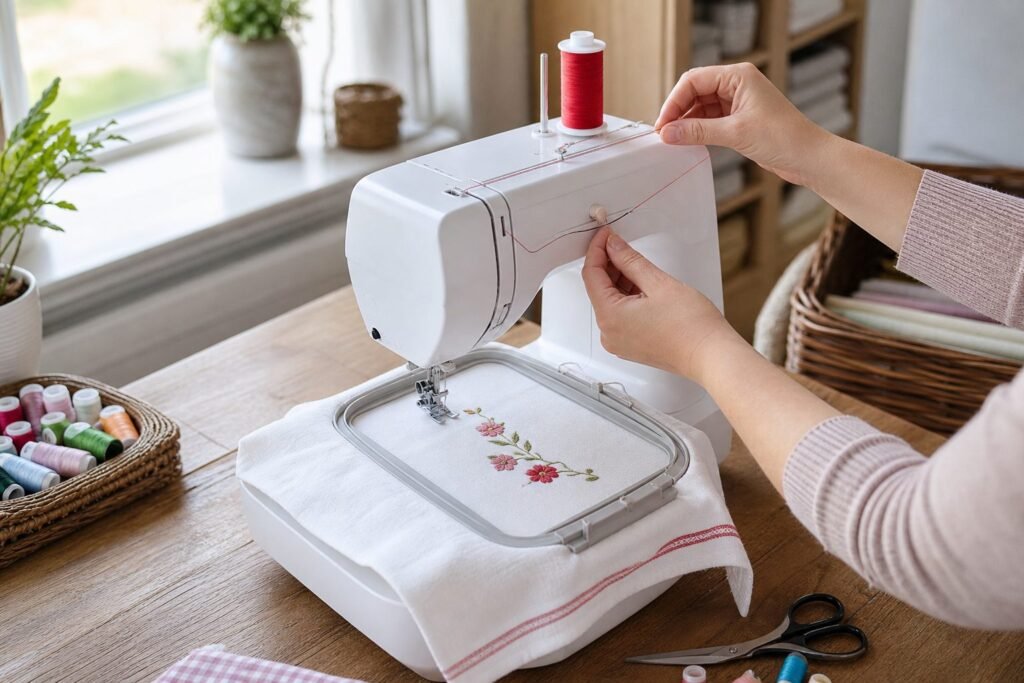
A single needle embroidery machine has one needle and one top thread at a time, much like a domestic sewing machine. You hoop the fabric, attach the hoop to an arm that moves it around under the needle, and the machine stitches each colour block in turn. When a colour is finished, it stops and waits for you to rethread with the next colour.
Most home embroidery machines and nearly all sewing and embroidery combos sold in the UK work this way. They use a flatbed design, so the hooped fabric lies flat on a table-height bed. That is ideal for tea towels, cushion fronts, quilt blocks, baby clothes and small appliqué, and it keeps the machine light enough to lift into a cupboard when you need the table back.
What is a multi needle embroidery machine?
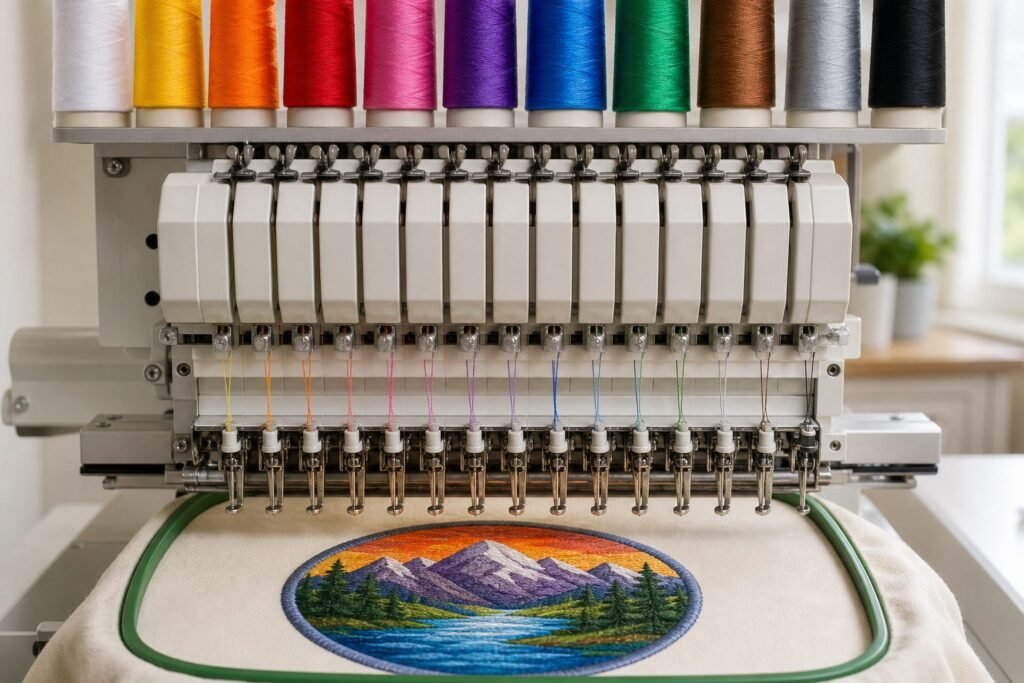
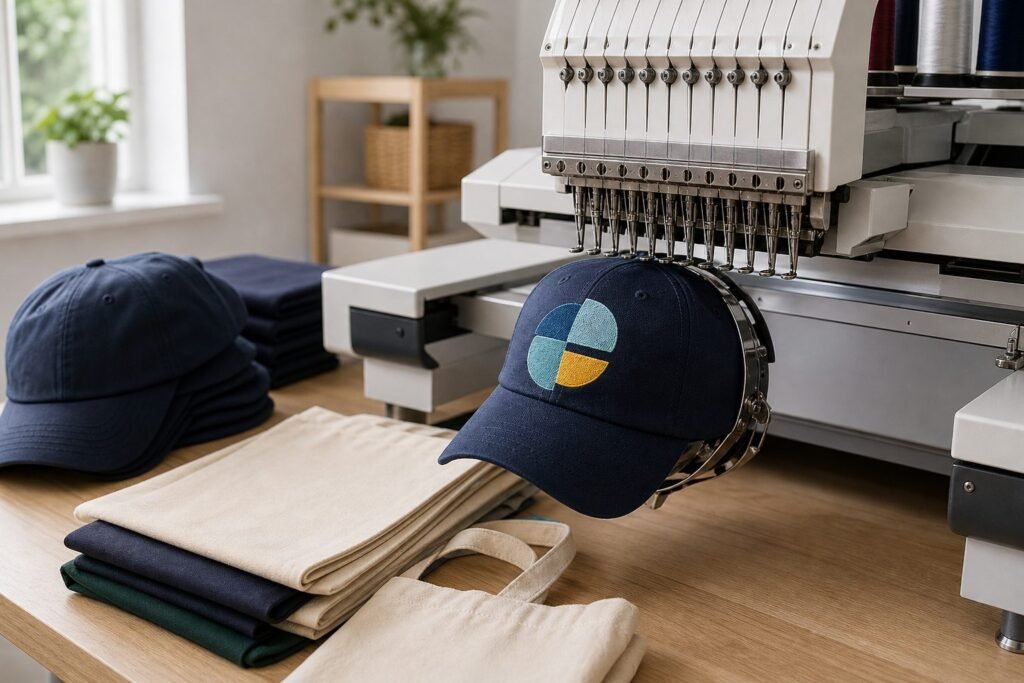
A multi needle embroidery machine carries several needles in a row on one head, usually somewhere between four and fifteen or more, each threaded with its own colour from its own cone. Only one needle stitches at a time. When the design calls for a new colour, the head slides across to the next needle, trims the old thread and carries on without you touching it.
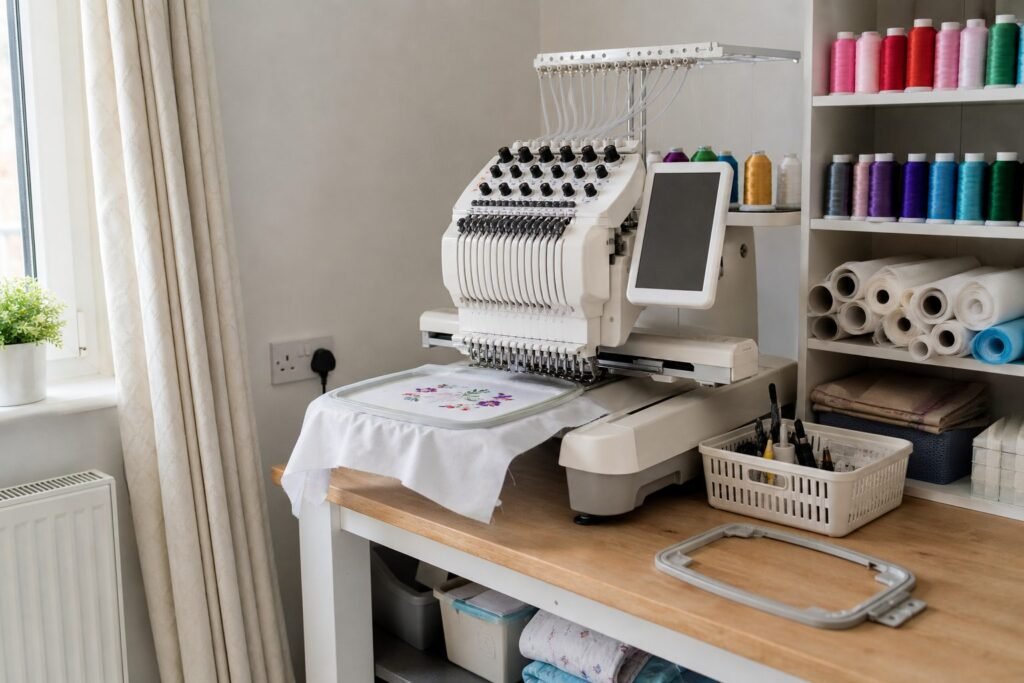
Most models are built around a free arm, or tubular, design rather than a flat bed. The hoop clamps onto arms that sit above a narrow cylinder, so a sleeve, a tote bag or the side of a cap can hang down around it. Larger machines with several heads side by side are a further step up, used by production embroidery firms rather than in spare rooms. Their industrial ancestor, the Schiffli embroidery machine, used hundreds of needles at once to make lace and trimmings in nineteenth-century Switzerland.
Embroidery machine terms explained
- Embroidery field
The largest area a machine can stitch in one hooping, usually given in millimetres or centimetres.
- SPM
Stitches per minute, the top stitching speed of the machine.
- Flatbed
A machine bed that sits flat on the table, so the hooped fabric lies flat while it stitches.
- Free arm (tubular)
A narrow arm that lets sleeves, bags and other tube-shaped items hang around the hoop.
- Cap frame
A curved hoop attachment that holds the front of a cap for embroidery on a free-arm machine.
- Colour stop
A point in a design where the machine pauses or changes to a new thread colour.
- Digitising
Turning artwork into a stitch file the machine can read, setting stitch types, order and direction.
Single needle vs multi needle embroidery machine: the key differences
Here is how the two compare on the points that matter most when you are actually stitching, so you can see where the single needle vs multi needle embroidery machine trade-offs really lie.
Colour changes and supervision
This is the big one. On a single needle embroidery machine, a design with eight colours means eight stops, each needing you to cut, rethread and press start. On a small motif that takes a few minutes in total, but on a large badge or a run of twenty name tags it adds up quickly, and you cannot wander far from the machine.
A multi needle embroidery machine is threaded before the run starts. You tell the machine which needle holds which colour, and it works through the whole design on its own, stopping only for a thread break, an empty bobbin or a planned stop such as placing appliqué fabric. According to the machine embroidery overview on Wikipedia, automatic colour changes and thread trimming are what set these machines apart from single-needle sewing-embroidery machines.
Speed
Multi-needle machines usually run faster in stitches per minute, but that is not where most of the time saving comes from. A home flatbed machine might stitch at a comfortable domestic speed, while a multi-needle machine can go considerably faster. In practice, many owners slow them down for caps, metallic thread and dense designs anyway.
The real gain is the time you do not spend rethreading. If a job has one colour, the two types are closer than you might think. If it has six or more colours and you are making several copies, a multi needle embroidery machine pulls far ahead.
Hoop size and embroidery field
Home single needle machines commonly offer fields such as 10 x 10 cm, 13 x 18 cm or 16 x 26 cm, with a few larger options at the top of the range. Many multi-needle machines offer bigger fields as standard, which means fewer re-hoopings and fewer joins in large designs such as jacket backs.
Multi-needle machines also tend to attach the hoop at two points rather than one, and the frame is more rigid. That helps heavier fabrics such as denim, canvas and fleece stay registered so outlines line up with their fills.
Hats, bags and sleeves
A flatbed machine cannot easily reach inside a finished item. To embroider a tote bag you often have to turn it inside out and bunch it around the hoop, and caps are realistically off the table. A free-arm multi-needle machine lets the item hang around the arm, and most accept an optional cap frame, so hats, sleeves, pockets, socks and bag fronts become everyday jobs instead of fiddly workarounds.
Space, noise and power
A single needle embroidery machine fits on a normal desk or craft table and can be packed away. A multi needle embroidery machine is heavier, taller and deeper, and it needs a sturdy, level surface that does not wobble at speed. It also needs room above and around it for a rack of thread cones. If you are planning a permanent embroidery corner, a solid table matters; our round-up of craft desks with storage covers sturdy options with drawers for hoops and stabiliser.
Expect more mechanical noise from a multi-needle head, particularly when it jumps between needles. Home models in the UK run from an ordinary 230 V socket, so plan for a nearby wall socket rather than a chain of extension leads.
Cost
Single needle machines cover the widest price range, from small entry-level embroidery-only models up to premium combos. A multi needle embroidery machine typically costs several times as much as a mid-range single needle model, and the accessories cost more too: cap frames, extra hoops, thread cones and sometimes software. Do not compare the machine price alone; compare what each will cost you to run the projects you actually plan.
Single needle vs multi needle embroidery machine for hobby use
For most people embroidering for themselves, family and friends, a single needle embroidery machine is the sensible choice. You stitch a handful of pieces at a time, designs are often simple, and the pauses between colours are a chance to check the work. You also keep the option of packing the machine away and using the table for other crafts. If you are just starting out, try a few small projects first; our cute embroidery projects for beginners give you ideas that suit a smaller hoop.
A single needle model also makes sense if you mainly embroider flat items before sewing them up, such as quilt blocks, cushion panels or garment pieces cut out but not yet assembled. If you are new to sewing as well, our guide on how to start sewing for beginners covers the basic skills that make embroidered projects easier to finish.
Single needle vs multi needle embroidery machine for a small business
The picture changes when embroidery becomes paid work. Selling personalised gifts, workwear logos, school or club badges, or custom caps means repeat runs of multi-colour designs, often on items that are hard to fit on a flatbed. That is exactly where the single needle vs multi needle embroidery machine gap is widest.
With a multi needle embroidery machine you can hoop the next item while the current one stitches, leave a long design running while you pack orders, and take on cap and bag work you would otherwise turn away. Many small UK embroidery businesses start on a single needle machine to test demand, then upgrade once orders regularly involve several colours and batches of identical pieces.
Learning curve and maintenance
A multi-needle machine is not much harder to learn, but there is more to set up. You have more thread paths to check, more tension dials, and a needle-to-colour order to plan for each design. Grouping colours on neighbouring needles keeps head movement down and reduces vibration.
Maintenance follows the same pattern on both types: change needles regularly, clear lint from the bobbin area, oil where the manual tells you to, and check tension with a test stitch-out on scrap fabric. A multi-needle machine simply has more of everything to look after. Check the warranty terms carefully if you plan to sell your work, because some home-machine warranties exclude commercial use.
Upgrading from a single needle to a multi needle machine
If you are weighing up a single needle vs multi needle embroidery machine upgrade, look at your last few months of projects. Count how many designs had five or more colours, how many items you stitched more than once, and how many jobs you declined because they were hats, bags or sleeves. If those numbers are growing, the time saved by a multi needle embroidery machine will add up quickly.
Keep your single needle machine if you can. It stays useful for quick one-off pieces, appliqué and test stitch-outs while the multi-needle machine handles production work, and it gives you a backup if one machine needs servicing in a busy season.
7 tips to help you choose
How many thread colours your usual designs use.
How many identical pieces you make in a typical week.
Flat panels, or finished items such as caps, bags and sleeves.
The largest design you can stitch in one hooping.
Table depth, height above it, and room for thread cones.
Hoops, cap frames, thread, stabiliser and software.
Whether commercial use is covered.
Common myths about multi-needle machines
Only one needle stitches at a time. The extra needles hold other colours ready, so the machine can switch without rethreading.
The saving is in colour changes, not in stitching several needles together.
Quality depends mainly on hooping, stabiliser, thread, needles and the digitised design. A well-set single needle machine can stitch a beautiful result.
Improve technique before blaming the machine.
Beginners can learn them, though there is more to thread and set up than on a home flatbed machine.
Expect a short learning period and practise on scrap fabric.
Switch the machine off before changing needles or clearing a thread jam, keep fingers clear of the moving head and hoop, and plug into a wall socket rather than an overloaded extension lead.
Single vs multi needle embroidery machine FAQs
Is a multi-needle embroidery machine worth it for a hobby?
Usually not, unless you stitch large multi-colour designs often or want to embroider caps and bags. Most hobby embroiderers are well served by a single needle machine.
Does a multi-needle machine stitch faster?
It can run at a higher top speed, but the biggest time saving comes from automatic colour changes rather than raw stitching speed.
Can a single needle machine embroider hats?
Most home flatbed machines cannot embroider finished caps properly. Hats generally need a free-arm machine with a cap frame.
Can I sell items made on a single needle machine?
Yes, many small sellers start that way. Check your warranty terms, and consider an upgrade once orders regularly involve several colours and repeat runs.
Do both types use the same design files?
Both stitch from digitised design files, but each brand reads particular formats, so check that your machine supports the files you plan to buy or create.
Which machine should you choose?
- Count your colours and volume
- List the items you embroider
- Plan space and safe power
- Budget for accessories as well as the machine
Choose a single needle machine for personal projects, flat items and small spaces. Choose a multi-needle machine when you regularly stitch multi-colour designs in batches, or want to embroider caps, bags and sleeves for paying customers.