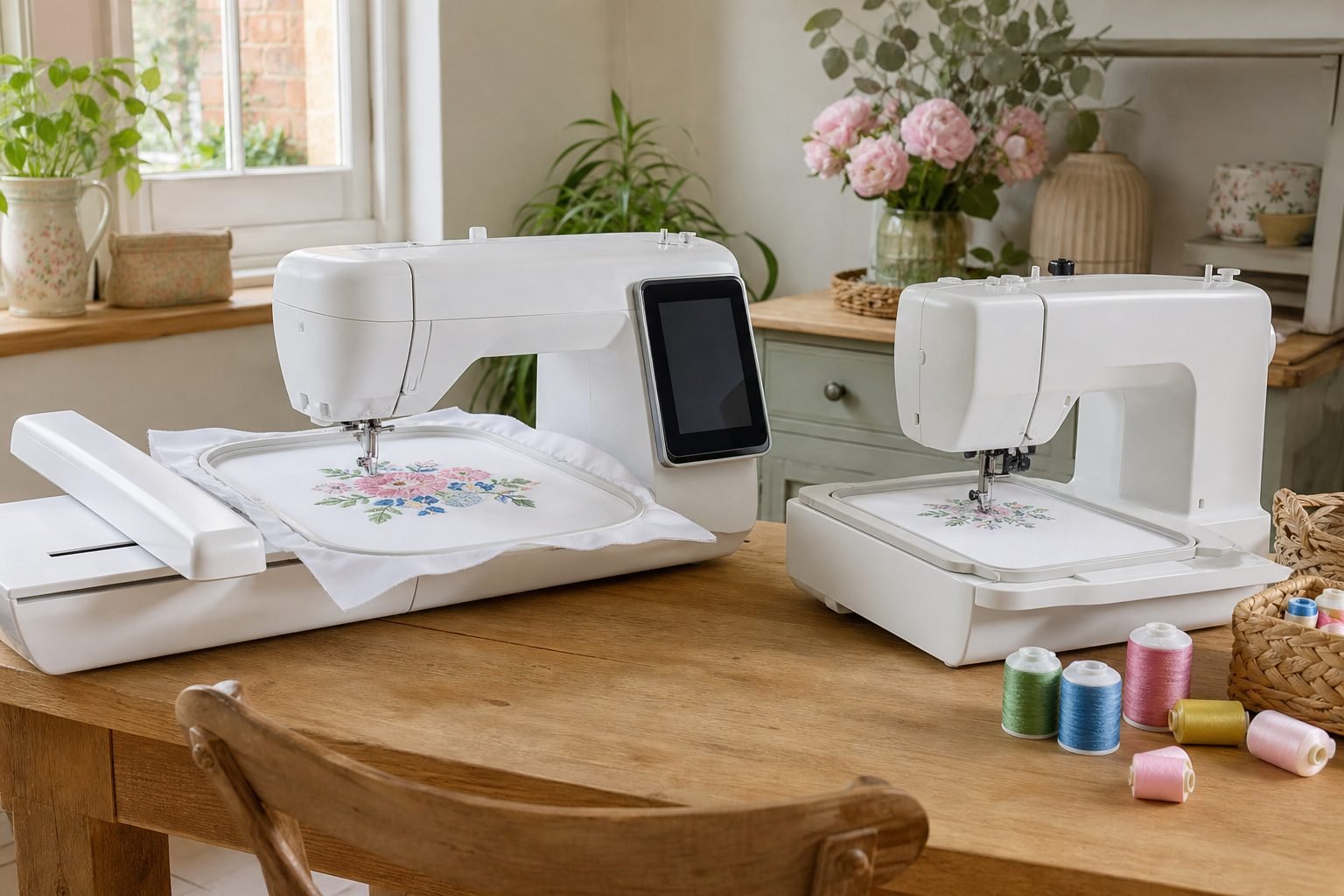
Embroidery Only Machine vs Combo: Which Should You Buy?
Choosing between an embroidery only machine vs combo comes down to how often you embroider, how big your designs are and whether you already own a sewing machine you love.
Here we compare both set-ups in plain terms, from hoop size and workflow to space, budget and small-business use, so you can buy once and buy well.
- How each machine type works
- Hoop size and design space
- Workflow, space and budget
- Which one suits your projects
The short answer
- Combo for versatility A sewing and embroidery machine suits beginners, small spaces and anyone who wants one machine for whole projects.
- Dedicated for embroidery An embroidery-only machine usually gives a larger hoop for the money and frees your sewing machine for other work.
- Hoop size matters most The embroidery field limits every design you can stitch in one hooping, so check it before anything else.
- Stabiliser rules are the same Good hooping and the right stabiliser matter equally on both types of machine.
Weighing up an embroidery only machine vs combo is one of the first big decisions a new machine embroiderer makes, and the right answer depends far more on how you sew than on any spec sheet. Both types stitch out digital designs held in a hoop, but one does nothing else, while the other doubles as an everyday sewing machine.
That sounds like an easy win for the sewing and embroidery machine, and for plenty of people it is. Yet a lot of experienced makers end up owning a dedicated embroidery machine alongside a separate sewing machine, and they have good reasons. This guide walks through how each type works, where each one shines, and the questions that will point you to the right choice for your space, budget and projects.
If you are brand new to the craft and still deciding whether machine embroidery is for you, our guide on how to choose the right craft hobby is a gentle place to start.
Embroidery Only Machine vs Combo: The Basic Difference
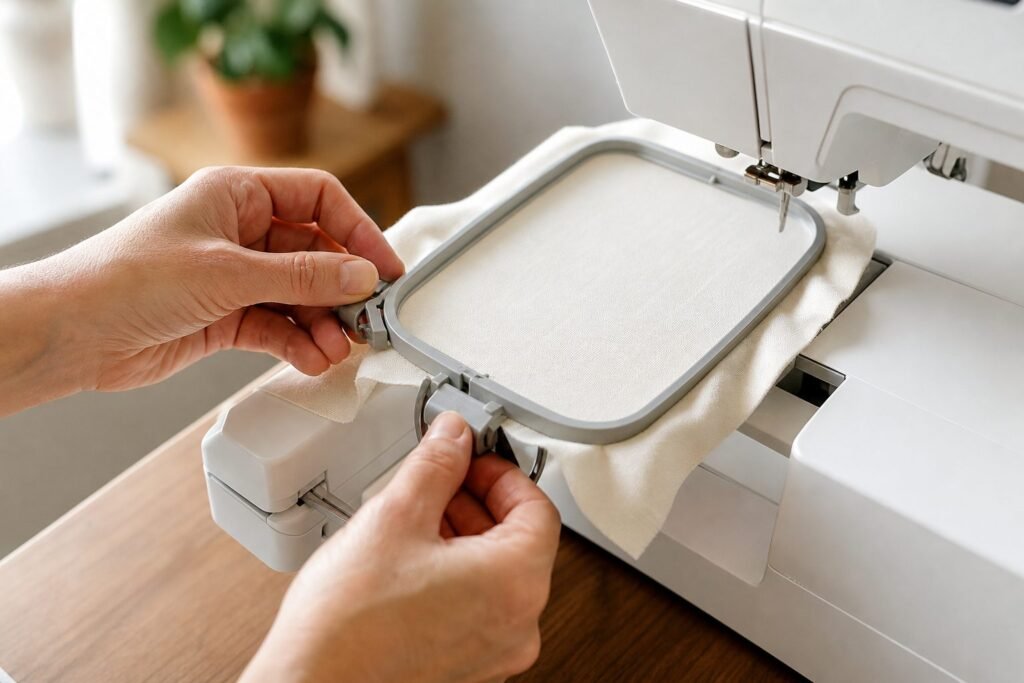
An embroidery-only machine is built for one job. You load a design, hoop your fabric with stabiliser, clip the hoop onto the carriage and the machine moves the hoop under the needle while it stitches. There are no feed dogs to guide fabric forwards and no utility stitches for seams or hems.
A sewing and embroidery machine is two tools sharing one body. With the embroidery unit removed, it behaves like a normal computerised sewing machine with a flat presser foot, feed dogs and a stitch menu. Slide the embroidery unit on, swap to an embroidery foot, and it becomes a hoop-driven embroidery machine.
As the Wikipedia overview of machine embroidery explains, single-needle home machines need you to change thread colours by hand during a design, while multi-needle machines are threaded with several colours before the run starts. That single detail shapes much of the embroidery only machine vs combo debate, because nearly every combo is a single-needle machine.
How an Embroidery-Only Machine Works
Because a dedicated machine never has to sew a seam, every part of it is designed around the hoop. The embroidery arm is usually fixed in place, so there is nothing to attach or calibrate before each session. You turn it on, select a design on the screen or from a USB stick, and start stitching.
Entry-level embroidery-only models are single-needle machines very similar in layout to a combo, just without the sewing side. Further up the range you find multi-needle machines with six, ten or more needles. You thread every colour at the start, and the machine switches between them on its own, which means you can leave a long design running while you get on with other things.
The trade-off is clear: an embroidery-only machine cannot sew a seam, attach a zip or hem a pair of trousers. If you want to turn your embroidered panel into a cushion, a bag or a quilt block, you will need a separate sewing machine for that part of the job.
How a Sewing and Embroidery Machine Works
A sewing and embroidery machine gives you a full sewing machine first. You get straight and zigzag stitches, buttonholes, decorative stitches and usually a free arm for sleeves and cuffs. When you want to embroider, you clip on the embroidery unit, which carries the hoop and moves it in every direction under the needle.
That versatility is the main appeal. One machine, one footprint on the table and one learning curve for threading and bobbin winding. For a beginner making gifts, personalising tea towels or adding a name to a school bag, a sewing and embroidery machine covers almost every project from start to finish.
The compromises are mostly about the embroidery side. Many entry-level combos have a small maximum embroidery area, often around 100 x 100 mm, and they cannot sew and embroider at the same time. When the embroidery unit is fitted, you also lose access to the free arm until you take it off again.
Hoop Size: Embroidery Only Machine vs Combo
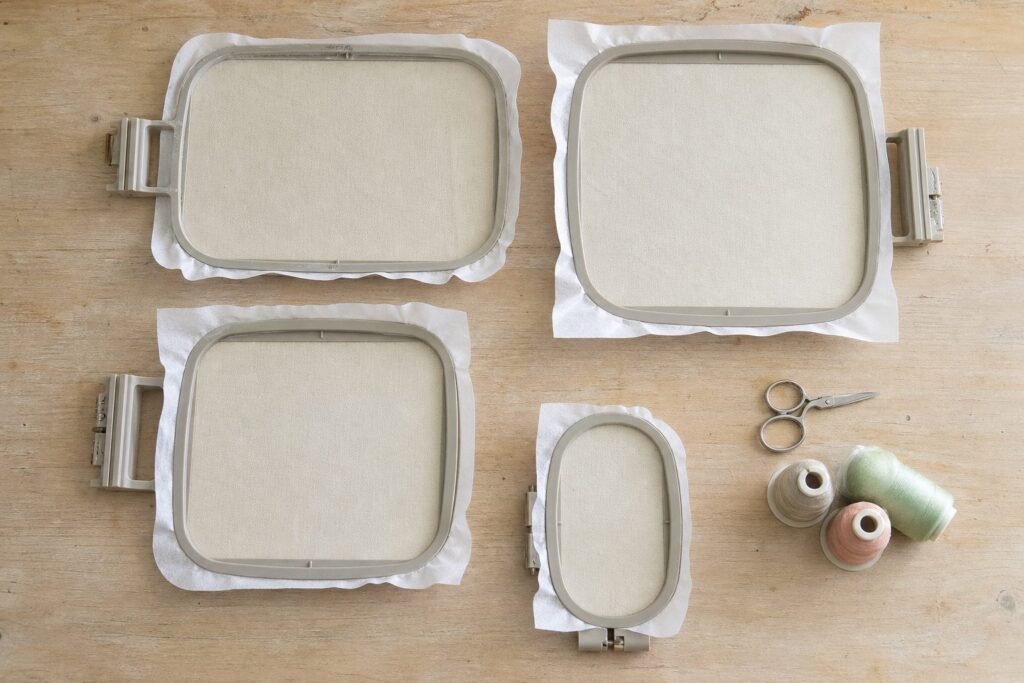
Hoop size is often the deciding factor. The embroidery field is the largest area the machine can stitch without you re-hooping, and it limits the size of every design you can stitch in one go. Small fields are fine for monograms, logos and little motifs, but they struggle with large back-of-jacket designs, cushion fronts and quilt blocks.
Budget combos commonly offer small fields, with mid-range machines moving up to around 130 x 180 mm. Many embroidery-only machines at similar prices offer larger fields, with fields such as 150 x 250 mm appearing on popular dedicated models. When you compare an embroidery only machine vs combo at the same price point, the dedicated machine usually gives you more stitching space for your money, because none of the budget goes on sewing features.
Larger designs can be split and stitched in sections on a smaller hoop, but aligning each section takes care and practice. If you already know you want big designs, buy the bigger field now rather than fighting with re-hooping later.
Hooping and Stabiliser Work the Same on Both
Whichever machine you choose, good results depend on hooping and stabilising properly. The fabric and stabiliser should sit drum-tight in the hoop without being stretched out of shape. The EduTech Wiki guide to hooping and stabilising from the University of Geneva describes simple checks, such as gliding a finger across the hooped fabric to make sure it does not ripple.
The stabiliser choice is the same on either machine. Tear-away suits stable woven cottons, cut-away suits knits and stretchy fabrics such as T-shirts and sweatshirts, and wash-away is used for free-standing lace or as a topper on towels so stitches do not sink into the pile. A combo is not more forgiving here, and an embroidery-only machine is not more fussy.
Workflow: Sewing and Stitching Out at the Same Time
This is where owning a dedicated embroidery machine really earns its place. A large design can take an hour or more to stitch. With a sewing and embroidery machine, the whole machine is tied up for that time. With an embroidery-only machine and a separate sewing machine, you can piece a quilt or sew a seam while the embroidery runs beside you.
Switching modes on a sewing and embroidery machine also adds small delays. You fit or remove the embroidery unit, change the presser foot, sometimes swap the needle and bobbin thread, and check settings. None of this is hard, but if you swap several times a day it adds up and can tempt you to put off small projects.
If you mainly sew garments and only embroider now and then, this matters very little. If embroidery is the main event, it matters a great deal.
Space, Budget and Reliability in a UK Home
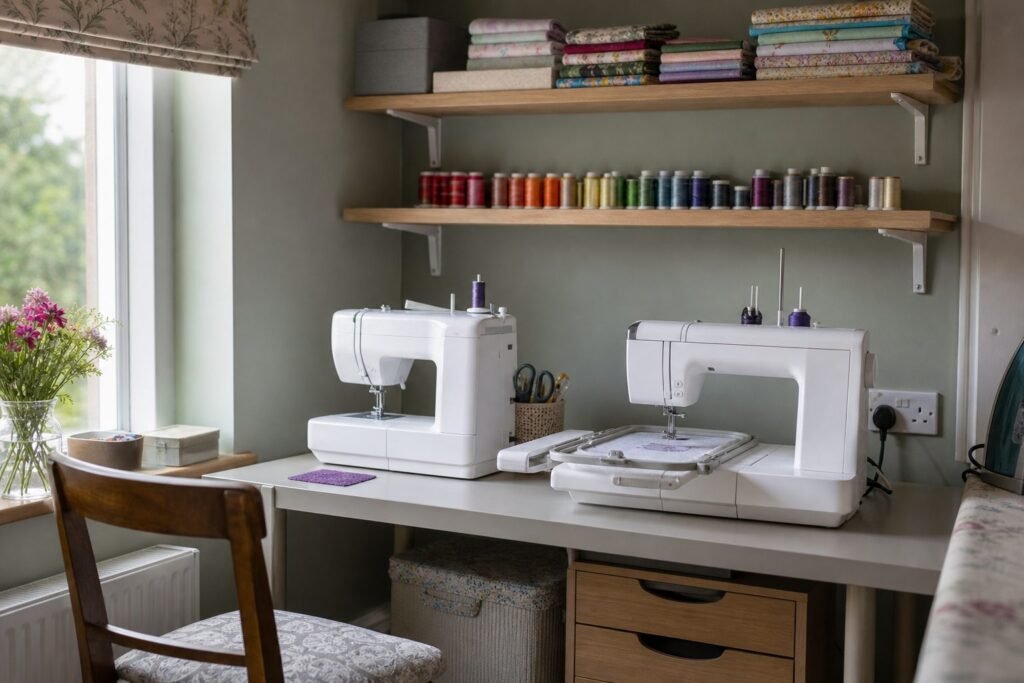
Space is a real consideration in smaller UK homes. A sewing and embroidery machine needs one table and one socket, and the embroidery unit can be stored in its box when you are not using it. Two machines need more width, a sturdy surface and somewhere sensible to keep thread and stabiliser. If your craft corner is tight, our roundup of craft desks with storage shows the kind of depth and drawer space that suits a machine setup.
Budget works in two directions. One combo is usually cheaper than buying two separate machines of similar quality. However, if you already own a reliable sewing machine, adding an embroidery-only machine can be the cheaper route to a bigger hoop.
Reliability is the hidden factor. With a sewing and embroidery machine, a fault or a service visit takes away both your sewing and your embroidery at once. With two machines, one can keep working while the other is away. Whichever you choose, use a properly rated UK extension lead if you need one, keep cables tidy and switch off at the wall when you finish.
Who Should Choose Which?
A sewing and embroidery machine is usually the better fit if you are new to both sewing and embroidery, you have limited space, you mostly embroider small designs, or you want one machine that can make a project from start to finish. If you still need a dependable everyday machine, read our guide to the best beginner sewing machine to see what good basic sewing features look like.
An embroidery-only machine is usually the better fit if you already own a sewing machine you like, you want a larger hoop for the money, you plan to embroider often, or you want to sew and stitch out at the same time. It also makes sense if you hope to sell personalised items, because the machine can keep running while you prepare the next order.
How to choose between the two
The largest area you can stitch in one hooping.
Whether you already own a sewing machine you are happy with.
Occasional motifs or regular, long stitch-outs.
Table width, depth and sockets in your craft corner.
How designs get from your computer to the machine.
Embroidery Only Machine vs Combo for Small Businesses
For anyone thinking about selling embroidered gifts or workwear, the embroidery only machine vs combo choice leans towards dedicated machines. Business work tends to mean repeated designs, several colours and long runs, which suits a machine that does nothing but embroider. Multi-needle models take this further by cutting out most of the manual colour changes.
That does not mean a combo cannot start a small side business. Plenty of makers test the market with a sewing and embroidery machine, then add a dedicated embroidery machine once orders grow. Starting small keeps your outlay down while you learn which products people actually want to buy.
Whatever you start with, keep a simple log of the stitch time for each design. It tells you how long each order really ties up your machine, which helps you price fairly and spot the moment when a second machine makes sense.
Practical Tips Before You Buy
Before you settle the embroidery only machine vs combo question, try to see both types in action at a sewing shop or a craft show before you decide. Watch how long it takes to fit the embroidery unit on a combo and how the hoop clips onto a dedicated machine. Ask to see the largest hoop each machine accepts, and check whether extra hoops are easy to buy.
Whichever side of the embroidery only machine vs combo choice you land on, look at how designs get onto the machine. Most home models use a USB stick, and some add Wi-Fi or an app. Check that the software works with your computer, and that the machine reads the file format your favourite design shops sell.
Finally, think about the projects you want to make in your first year. If they are mostly small motifs on bought items, either type will serve you well. If you dream of large quilt blocks or a growing gift business, give extra weight to hoop size and to being able to sew and embroider at once. Our list of cute embroidery beginner projects is full of small, satisfying ideas to get you started.
Common myths about combo and dedicated machines
Stitch quality depends far more on hooping, stabiliser, thread and the design file than on whether the machine can also sew.
Spend time on technique before blaming the machine.
Dedicated embroidery machines have no feed dogs or utility stitches, so you still need a sewing machine to construct projects.
Budget for a sewing machine if you do not own one.
It saves money if you need both functions, but if you already own a good sewing machine a dedicated embroidery machine can offer a bigger hoop for the same spend.
Compare hoop size at each price point.
Plug machines directly into a wall socket where you can, avoid daisy-chaining extension leads, and switch off at the wall before changing needles or fitting the embroidery unit.
Embroidery only machine vs combo FAQs
Is a sewing and embroidery machine good for beginners?
Yes. A combo is a sensible first machine for most beginners because it handles both sewing and small embroidery projects in one footprint.
Can I embroider with a normal sewing machine?
You can do free-motion embroidery by lowering the feed dogs and moving the fabric yourself, but a normal sewing machine cannot read or stitch digital embroidery designs.
Can a combo sew and embroider at the same time?
No. A combo does one job at a time, so while a design is stitching out you cannot use it for sewing.
Why do embroidery-only machines often have bigger hoops?
Because none of the cost goes on sewing features, dedicated machines often offer a larger embroidery field at a similar price.
Do I need different stabilisers for each type of machine?
No. Stabiliser choice depends on the fabric and design, not on the machine. Tear-away, cut-away and wash-away are used the same way on both.
Which machine should you choose?
- Check the embroidery field first
- Count the sewing machine you already own
- Think about how often you will embroider
- Plan for space and safe power at home
For most beginners with limited space, a sewing and embroidery machine is the practical choice. If you already own a sewing machine you like, embroider often or want bigger designs, a dedicated embroidery-only machine usually gives better value and a smoother workflow.