Turn What You Already Own Into Something Useful
Everyday household items like jars, boxes, tubes and old clothes can become storage, decorations and gifts with little more than glue, paint and an afternoon.
This guide shows you which materials to save, twelve projects to try, how to prepare surfaces so your work lasts, and the mistakes that trip up most beginners.
- Which household materials are worth saving
- Twelve practical projects to try
- How to make paint and glue hold
- Mistakes to avoid and budget tips
- Start with what you have Cardboard, glass jars, plastic tubs and old fabric cover almost every beginner project.
- Preparation matters most Clean, degrease and prime surfaces so paint and glue stay put.
- Match glue to material Paper glue for card, fabric glue for textiles, multi-surface adhesive for glass and plastic.
- Save with limits One labelled box per material keeps your stash useful rather than cluttered.
Craft Ideas Using Everyday Household Items: Where to Start
Everyday household items are the cheapest craft supply you will ever own, because most of them are already sitting in your recycling bin, kitchen drawer or wardrobe. Before you start cutting, it helps to know which materials are worth saving and what each one does well. If you are completely new to making things, our guide on how to start crafting at home for beginners covers the basic tools and habits that make every project easier.
The trick is to treat packaging and leftovers as raw materials rather than rubbish. A cereal box is really a sheet of thin card. A pasta sauce jar is a clear glass vessel with a sealing lid. An old shirt is a generous piece of soft fabric. Once you see things this way, upcycled crafts stop feeling like a novelty and become a practical way to make objects you actually use.
Cardboard, paper tubes and boxes
Cardboard is the most versatile material in the house. Thin card from food boxes cuts easily with scissors and takes paint well once primed, while corrugated delivery boxes are strong enough for storage trays, wall art and play furniture for children. Paper tubes from kitchen and toilet rolls make desk organisers, napkin rings, seed starters and little figures.
Glass jars and bottles
Glass jars are among the most useful everyday household items for crafting. Glass is durable, waterproof and easy to clean, which makes it ideal for storage jars, vases, lanterns and small terrariums. Soak jars in warm soapy water to lift the labels, then rub away sticky residue with a little cooking oil. Wipe the outside with rubbing alcohol before painting so the paint grips instead of peeling.
Plastic containers and bottles
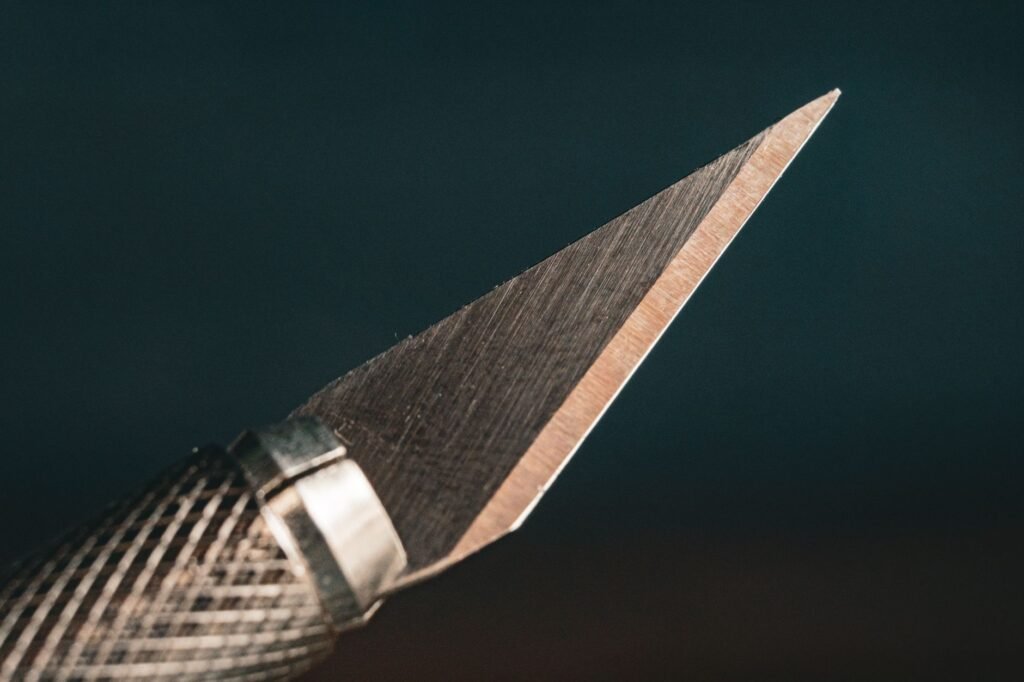
Yoghurt pots, takeaway tubs and drinks bottles become plant pots, paint palettes, bird feeders and drawer dividers. Plastic is slippery, so lightly sanding the surface or using a primer made for plastic helps paint and glue hold. Cut it with a sharp craft knife on a protected surface and file any rough edges smooth.
Fabric, clothing and textile scraps
Old T-shirts, jeans, pillowcases and odd socks turn into tote bags, braided rugs, cushion stuffing, scrunchies and cleaning cloths. Knit fabrics such as T-shirt jersey do not fray, so they suit no-sew projects. Woven fabrics such as denim need a hem, a zigzag edge or fabric glue along the cut.
Kitchen and bathroom odds and ends
Egg cartons, bottle caps, wine corks, wooden spoons, foil, clothes pegs and spare buttons all deserve a second life. Corks become trivets and stamps, egg cartons become seed trays and paint wells, and bottle caps make bright mosaics and fridge magnets. Keep a small tin for these tiny pieces, because they are often the finishing touch that makes recycled craft ideas look deliberate.
Useful Terms for Household Crafting
- Upcycling
Turning something you would throw away into an item of equal or greater use or value, such as a jar into a lantern.
- Repurposing
Using an object for a new job without changing it much, like an egg carton as a paint palette.
- Primer
A base coat that helps paint bond to slippery surfaces such as glass, metal or plastic.
- Decoupage
Gluing paper cut-outs onto a surface and sealing them under layers of clear glue or varnish.
- Sealer
A clear protective coat that shields finished paint from moisture, scuffs and fading.
12 Creative Projects You Can Make From Everyday Household Items
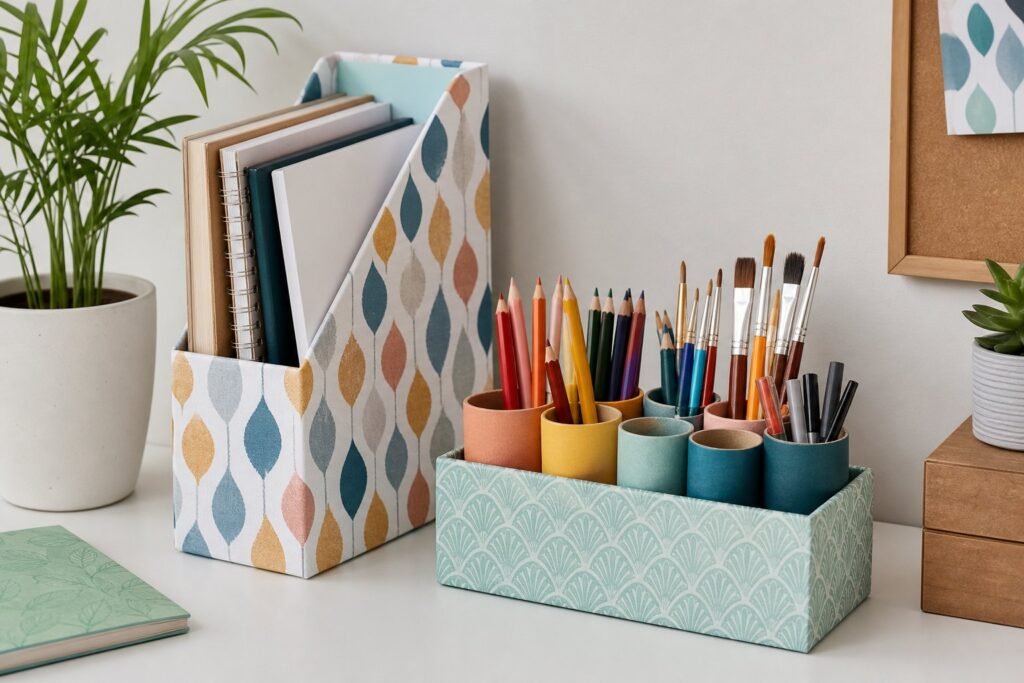
The best projects solve a small problem at home while giving you a satisfying afternoon of making. The twelve ideas below are grouped by purpose, and each one uses everyday household items with only basic extras such as glue, paint, string and scissors. Pick one that fits the time you have and the materials already piling up.
Projects that brighten your home
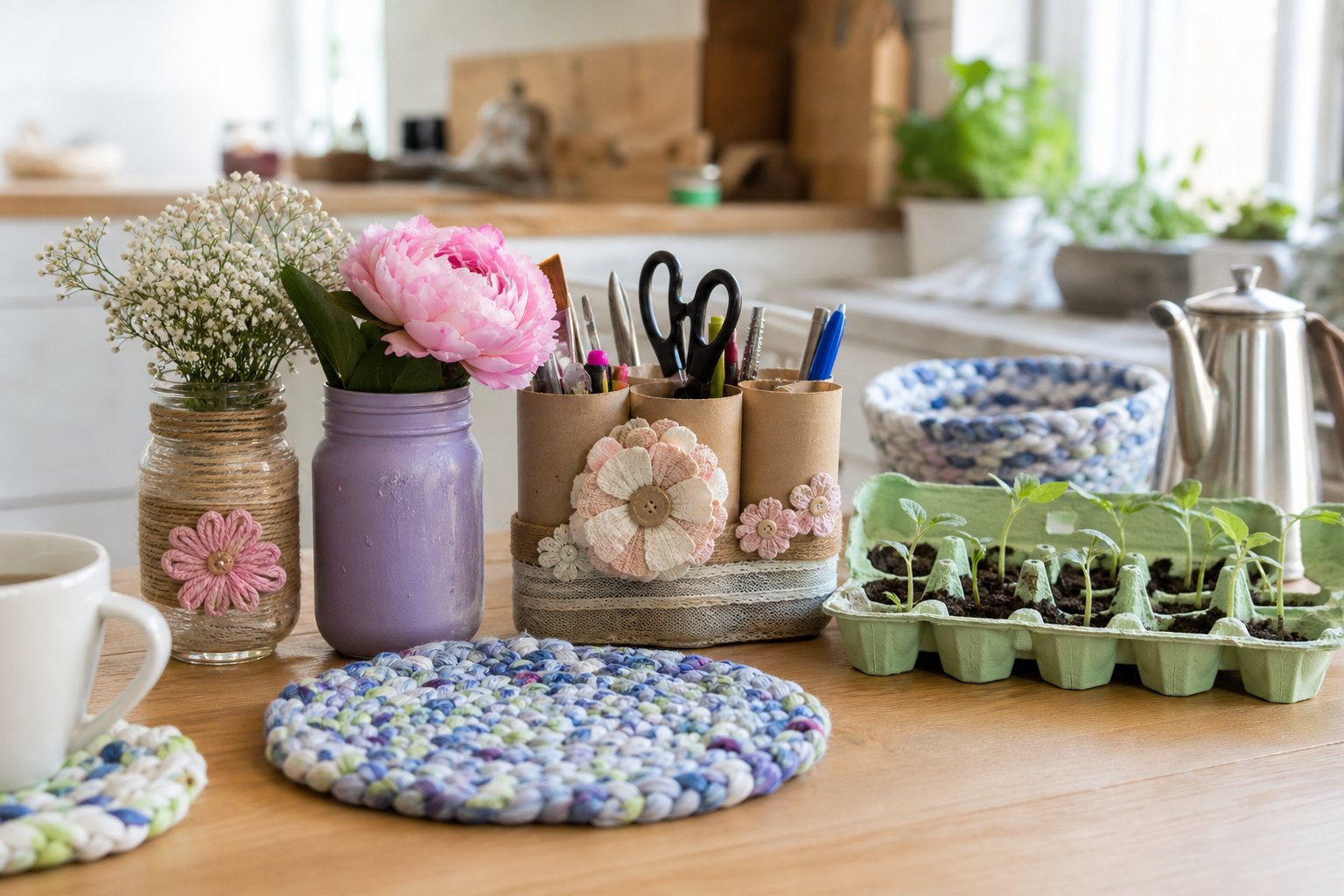
Painted glass jars make simple vases for garden flowers or dried grasses. A cardboard box cut into a shallow frame and filled with arranged buttons, pasta shapes or bottle caps becomes textured wall art once you paint it a single colour. Clean tin cans with smoothed rims turn into hanging lanterns when you punch a pattern of holes with a nail and hammer. Fabric scraps braided into long strips and coiled together make a soft rug or a set of coasters.
Practical organisers
Paper tubes glued side by side inside a shoebox create a cable tidy or a pen holder with a dozen slots. Cereal boxes cut on the diagonal become magazine files, and covering them in leftover wrapping paper or wallpaper makes them look shop-bought. Glass jars screwed by their lids to the underside of a shelf give you clear storage for screws, buttons or beads. Egg cartons make neat dividers for earrings, sewing pins and small hardware, proving that everyday household items can be as practical as anything you buy.
Gifts and decorations
An old T-shirt cut and knotted becomes a no-sew tote bag that is perfect for carrying shopping. Wine corks glued in a ring make a heat-proof trivet for the kitchen table. Jars filled with layered dry ingredients for cookies or soup make thoughtful presents when you add a handwritten tag. Paper rolls pressed into petal shapes and painted make a striking flower wall decoration or seasonal wreath.
Choosing your first project
If you are unsure where to begin, choose the material you have most of. A kitchen full of jars points to storage and lanterns, while a pile of delivery boxes suits organisers and wall art. Start with a project you can finish in one sitting, because a quick success builds confidence for bigger upcycled crafts. Gather all your everyday household items and tools before you begin, so you are not hunting for scissors halfway through a glue step.
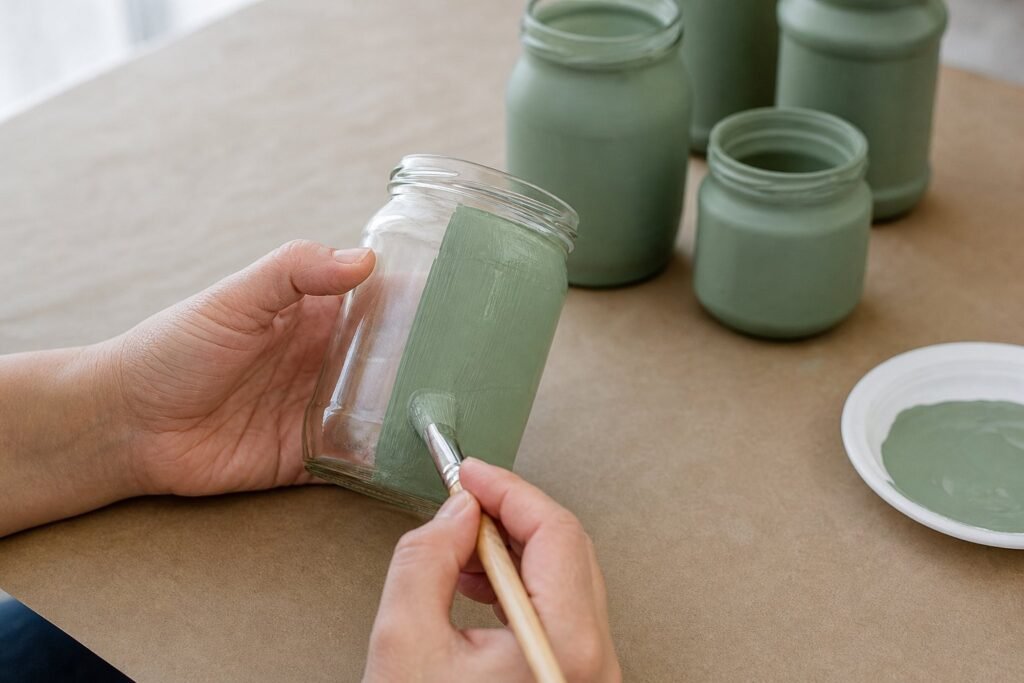
How to Turn a Glass Jar Into a Painted Storage Jar
-
Choose a sound jar
Pick a jar with no chips or cracks and a lid that still screws on firmly.
-
Remove the label
Soak in warm soapy water for 20 minutes, peel the label, then rub away glue with a little cooking oil.
-
Degrease the surface
Wash again, dry thoroughly and wipe the outside with rubbing alcohol on a lint-free cloth.
-
Prime the glass
Apply a thin coat of primer suited to glass, or use a multi-surface paint, and let it dry fully.
-
Paint in thin coats
Add two or three light coats of colour, letting each dry before the next to avoid drips.
-
Decorate and seal
Add twine, paper labels or painted details, then finish with a clear sealer and allow it to cure.
Paint only the outside of jars that will hold food, and hand-wash painted jars gently.
Check jars and cans for chips and sharp rims before you start, and file or tape any rough edges. Cut away from your body on a protective mat, and use spray primers or varnish only outdoors or in a well-ventilated room.
Common Mistakes to Avoid With Recycled Craft Ideas
The most frequent complaint from people trying recycled craft ideas is that paint peels off glass or plastic within days. This almost always comes down to skipped preparation. Grease, label glue and fingerprints stop paint from bonding, so wash, dry and wipe every surface with rubbing alcohol, then use a primer suited to the material before your colour coat.
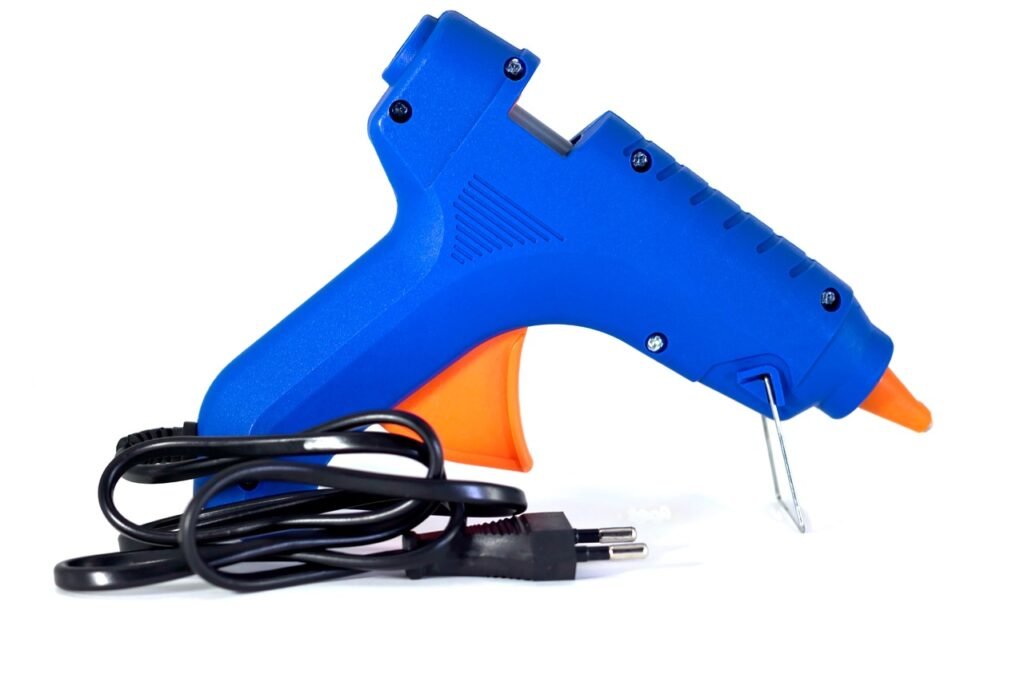
The second mistake is choosing the wrong glue. White school glue is fine for paper and card, but it will not hold glass, metal or smooth plastic. Hot glue grips quickly but can let go on cold glass, while a clear multi-surface craft adhesive gives a stronger and longer-lasting bond. Test a small patch first and allow the full curing time printed on the label.
Many beginners also save far too much. A cupboard bursting with jars and boxes quickly becomes clutter rather than inspiration. Keep a single labelled box for each material and recycle anything that no longer fits. Finally, do not rush sealing: a coat of clear varnish protects painted items from moisture and handling, but only once the paint underneath is completely dry.
A quieter mistake is skipping the plan. Recycled craft ideas often look simple in photos, yet a jar lid that will not close or a box that buckles under weight can spoil the result. Measure twice, sketch the shape, and test how your everyday household items behave when cut, glued or painted before committing to the final piece.
Household Crafting Myths
Smooth surfaces need cleaning, degreasing and a suitable primer or multi-surface paint.
Skipping preparation is the main reason painted jars and bottles peel.
Careful finishing, a limited colour palette and clean edges make upcycled pieces look polished.
Good finishing turns packaging into decor you are happy to display.
A small, sorted stash is far more useful than a cupboard of random packaging.
Limits keep your space tidy and make materials easy to find.
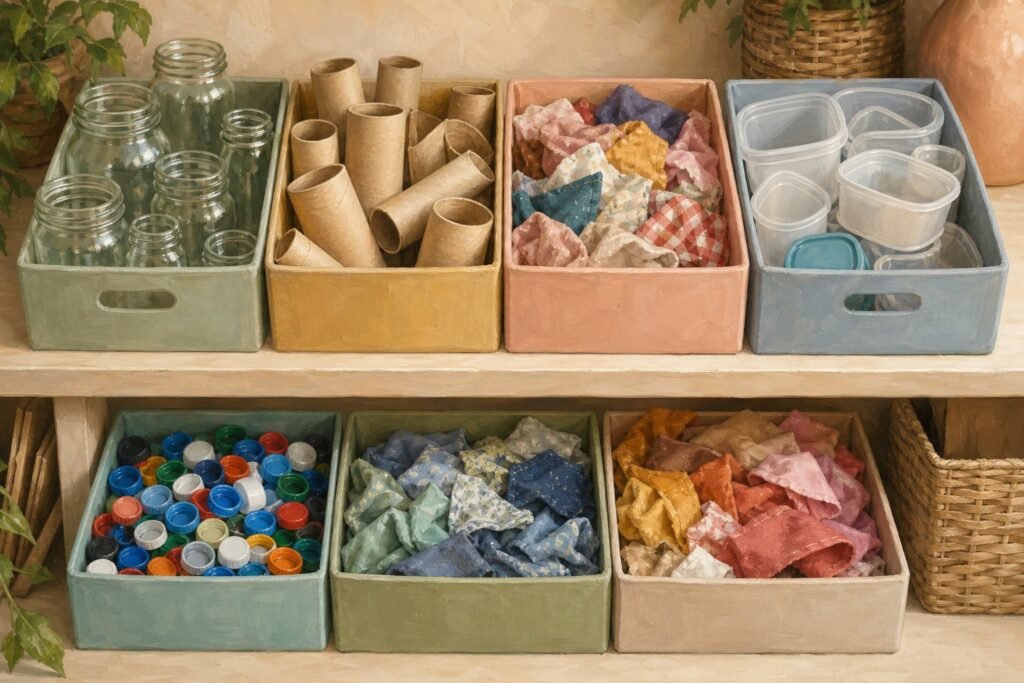
Building a Free Craft Stash on a Budget
Crafting from everyday household items is one of the few hobbies where the supplies cost almost nothing. A small investment in good scissors, a craft knife, a cutting mat, a glue you trust and a few pots of acrylic paint will cover the vast majority of projects. Everything else can come from the recycling bin, charity shop bags, or a quick swap with friends and neighbours.
A simple saving system
Rinse containers as soon as they are empty, flatten boxes, and let tubes dry fully before storing them so nothing goes mouldy. Sort finds into clearly marked boxes for card, glass, plastic, fabric and small bits. Set a limit, such as one box per material, and pass on extras to schools, nurseries or community groups that welcome clean donations for upcycled crafts.
Swapping and sharing materials
Friends, neighbours and local groups are often glad to hand over clean jars, fabric offcuts and sturdy boxes. A simple swap evening lets everyone trade surplus materials, and it is a sociable way to discover recycled craft ideas you would not have tried alone. Ask local cafes for spare glass jars or coffee sacks, which they often recycle anyway.
Seasonal projects through the year
Plan projects around the calendar so your stash keeps moving. In spring, egg cartons and yoghurt pots become seed starters for the garden. Summer suits jar lanterns and bottle bird feeders for outdoor evenings. In autumn, paper tubes and card make wreaths and table decorations, and winter is ideal for jar gifts, cardboard tree ornaments and fabric scrap bunting for the festive season.
Getting the Details Right With Everyday Household Items
With upcycled crafts, the difference between a project that looks homemade in a good way and one that looks like rubbish usually comes down to finishing. Sand cut edges of card and plastic, remove every scrap of label residue, and choose a limited colour palette so mismatched packaging looks intentional. Two coats of thin paint always look better than one thick, streaky coat.
Think about how the finished piece will be used, too. Anything that will hold water, sit outdoors or be handled daily needs a waterproof sealer and a sturdy base. Decorations that hang only need to be light and well balanced. If you enjoy these projects and want more inspiration, browse our list of easy arts and crafts ideas for adults for techniques you can combine with the materials you have saved. Use the criteria below to decide which everyday household items are worth keeping and which belong straight in the recycling.
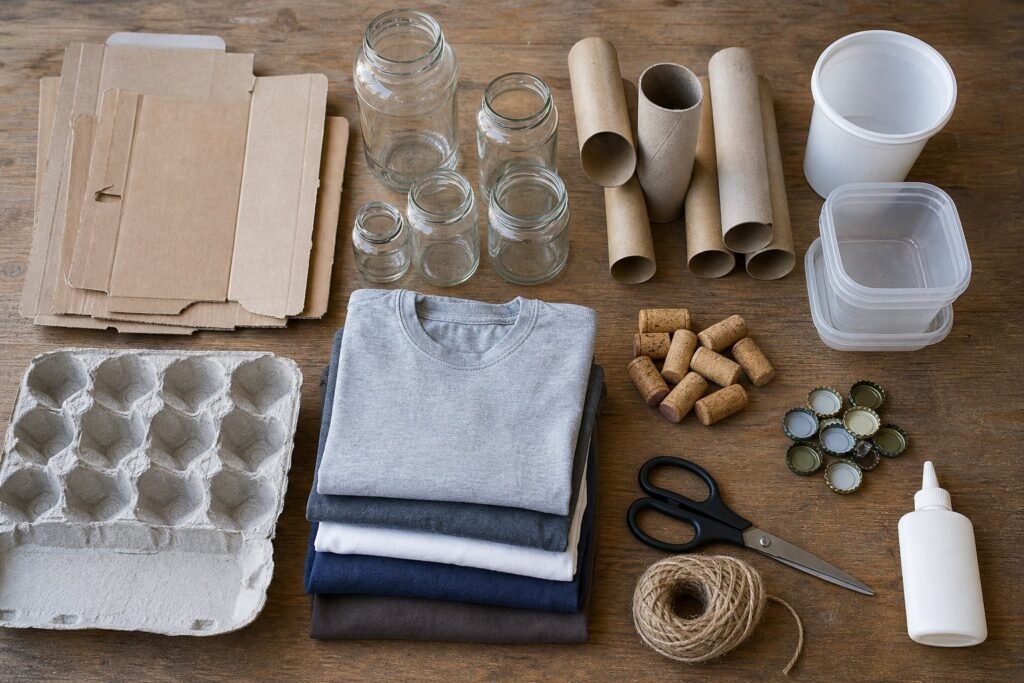
What to Look For When Saving Household Items
Items should be intact and safe to handle.
Food residue attracts pests and stops paint bonding.
Save items with a clear project in mind.
Your stash should fit your home.
Reusing packaging for upcycled crafts is good for your wallet and the planet. The US Environmental Protection Agency's page on reducing and reusing basics explains why repurposing containers and old clothing is one of the most effective ways to cut household waste. If you craft with children, the PBS collection of upcycled activities for families groups dozens of simple projects by material, from egg cartons to plastic bottles.

What household items are best for crafting?
Cardboard boxes, paper tubes, glass jars, plastic bottles, egg cartons, old T-shirts, wine corks and bottle caps are the most useful. They are easy to clean, simple to cut or shape, and turn up in most homes every week.
How do I get paint to stick to glass jars?
Wash the jar in warm soapy water, remove label glue with cooking oil, then wipe the outside with rubbing alcohol. Apply a primer made for glass or a multi-surface paint in thin coats and seal it once dry.
Which glue works best for recycled crafts?
Use white craft glue for paper and card, fabric glue for textiles, and a clear multi-surface craft adhesive for glass, metal and plastic. Hot glue is quick but can loosen on cold or smooth surfaces.
Are upcycled crafts safe for children?
Yes, with supervision. Choose card, paper tubes, egg cartons and fabric for young children, and keep glass, tin cans and craft knives for adults. Always clean food containers thoroughly first.
How do I stop my craft stash from becoming clutter?
Keep one labelled box per material, rinse and dry items before storing, and set a limit. When a box is full, use some items in a project or pass them on to schools and community groups.
Can I sell crafts made from household items?
Many makers sell upcycled storage jars, tote bags and decorations. Finish them carefully, seal painted surfaces, and remove any original brand logos or labels before listing them.
Start Your First Household Craft Today
- Save materials with a project in mind
- Clean, prime and seal for lasting results
- Match your glue to the material
- Keep your stash sorted and limited
You do not need a shop full of supplies to make something useful and beautiful. Save a few clean jars, boxes and fabric scraps, prepare surfaces properly, and choose one simple project to finish this week.