How Much Does an Embroidery Machine Cost? UK Prices Explained
How much does an embroidery machine cost in the UK? This guide sets out realistic price bands, from compact home machines to multi-needle models.
It also covers what makes one machine dearer than another, and the running costs of thread, stabiliser and software that are easy to overlook.
- UK price bands by machine type
- What pushes the price up
- Hidden running costs
- Tips for keeping costs down
The short answer
- Entry level from about £600 Compact embroidery-only machines with a 10 x 10 cm field were listed from around £690 to £900.
- Mid-range £1,200 to £1,700 Larger fields, touchscreens and design editing suit most keen hobbyists.
- Premium and multi-needle Large-field home machines run into several thousand pounds, and multi-needle machines start around £7,000 before VAT.
- Budget for consumables Thread, stabiliser, needles, hoops and software add an ongoing cost on top of the machine.
How much does an embroidery machine cost in the UK? In short, anywhere from a few hundred pounds for a compact home model to well over £10,000 for a multi-needle machine built for a business, and the price of the machine is only part of the total embroidery machine cost.
This guide breaks the embroidery machine cost down into clear price bands, explains what pushes the price up, and covers the running costs that first-time buyers often forget. The prices quoted come from UK retailer and education-supplier listings we read in November 2026, and they move with sales and new models, so treat them as a guide rather than a quote.
How much does an embroidery machine cost? The UK price bands
Embroidery machines fall into fairly clear bands. The main things that separate them are the size of the embroidery field (the biggest area the machine can stitch in one hooping), the number of needles, the screen and editing features, and whether the machine also sews.
Entry level: roughly £600 to £900
At the bottom of the proper embroidery range sit compact embroidery-only machines with a 10 x 10 cm field. On UK listings we saw these from about £690 on offer to around £900. They are ideal for names, monograms, small motifs and practising, but larger designs have to be split and re-hooped, which takes care and patience.
Be careful with very cheap listings. Some machines under £200 are tagged "embroidery" online because they have a few built-in decorative or lettering stitches, but they cannot stitch digitised designs in a hoop. A true embroidery machine has an embroidery unit that moves the hoop under the needle.
Mid-range: roughly £1,200 to £1,700
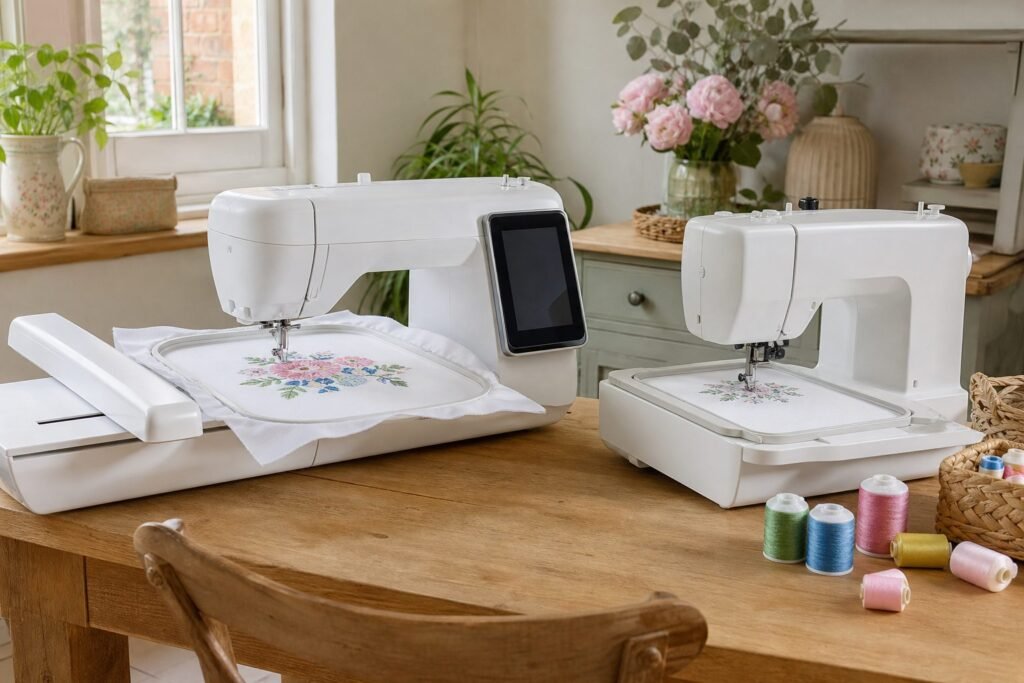
This is where many keen hobbyists end up. Machines in this band usually offer a larger field, a colour touchscreen, on-screen editing and USB or wireless design transfer. UK specialists listed single-needle embroidery-only machines at around £1,200 to £1,700, depending on field size and offers.
Sewing and embroidery combination machines also start to appear around here. If you are torn between the two styles, our guide to embroidery-only machines vs combo machines explains the trade-offs.
Premium home machines: roughly £2,500 to £7,000
Premium single-needle machines add larger fields, faster processing, better design placement tools, cameras or projectors on some models, and more built-in designs. The UK listings we read placed large-field home machines and higher-end combos at about £2,500 to £4,500, with top combination machines around £6,750.
Flagship home machines go further still. One brand's top sewing, quilting and embroidery model was listed at just under £15,000, which is more than many multi-needle machines.
Multi-needle machines: roughly £7,000 to £10,000 and up
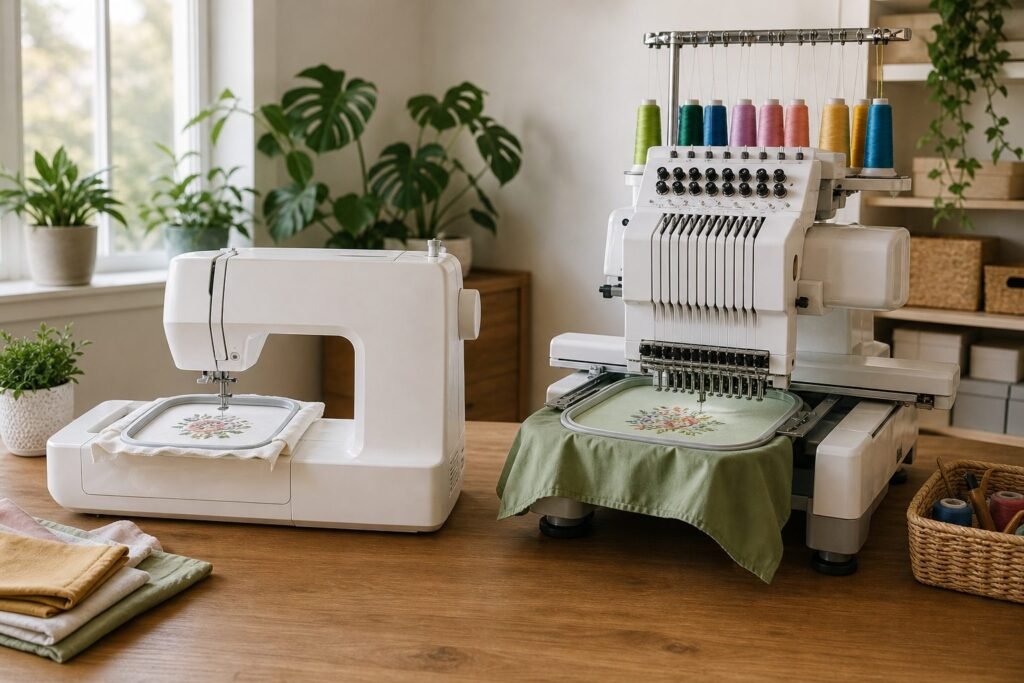
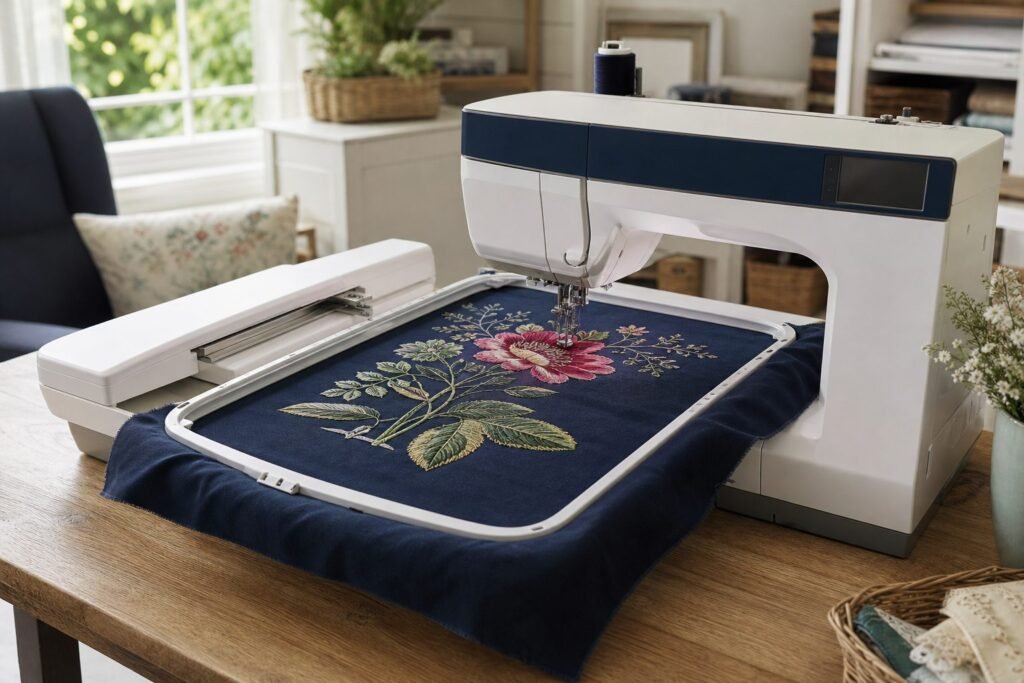
For anyone planning paid work, how much does an embroidery machine cost at the business end is a very different question. Multi-needle machines hold several colours at once and change thread automatically, so they suit regular orders, caps, bags and sleeves. An education supplier listed a six-needle model at about £7,385 and a ten-needle model at about £9,440, both excluding VAT. Those are subsidised prices for schools; with 20% VAT added, the six-needle figure becomes roughly £8,860, and retail prices for home businesses may differ.
Commercial multi-head machines, used by embroidery shops, sit above this again and are usually priced on quote. If you are unsure whether you need the extra needles at all, read our guide to single needle vs multi needle embroidery machines first.
Price terms explained
- Embroidery field
The largest area the machine can stitch in one hooping, and the biggest single factor in price.
- Combo machine
A machine that both sews and embroiders, usually with a detachable embroidery unit.
- Multi-needle
A machine holding several threaded needles, so it changes colour automatically.
- Ex VAT
A price before 20% VAT is added, common on business and education listings.
- Stabiliser
Backing or topping material that keeps fabric steady while it is stitched.
What affects embroidery machine cost?
When people ask how much does an embroidery machine cost, the honest answer is that two machines with similar stitch quality can differ by thousands of pounds. Knowing why helps you avoid paying for features you will never use.
- Embroidery field size. This is the biggest single driver. Moving from a 10 x 10 cm hoop to 16 x 26 cm or larger usually moves you up a price band.
- Number of needles. One needle means you rethread for every colour. Six to ten needles save time but cost much more.
- Sewing as well as embroidery. Combination machines can be good value if you sew, but you pay for both functions.
- Screen and editing. Larger touchscreens let you resize, rotate and combine designs on the machine rather than on a computer.
- Connectivity. Wireless transfer, apps and built-in cameras for placing designs add cost.
- Built-in designs and fonts. Handy for beginners, but you can buy designs separately later.
- Dealer support. Buying from a sewing specialist may include set-up lessons, a longer warranty or servicing, which is worth counting in the price.
Hidden costs: what you will spend after the machine
Working out how much does an embroidery machine cost over a year means looking past the price on the box. Every design uses consumables, and some costs only appear once you start stitching regularly.
Thread and bobbins
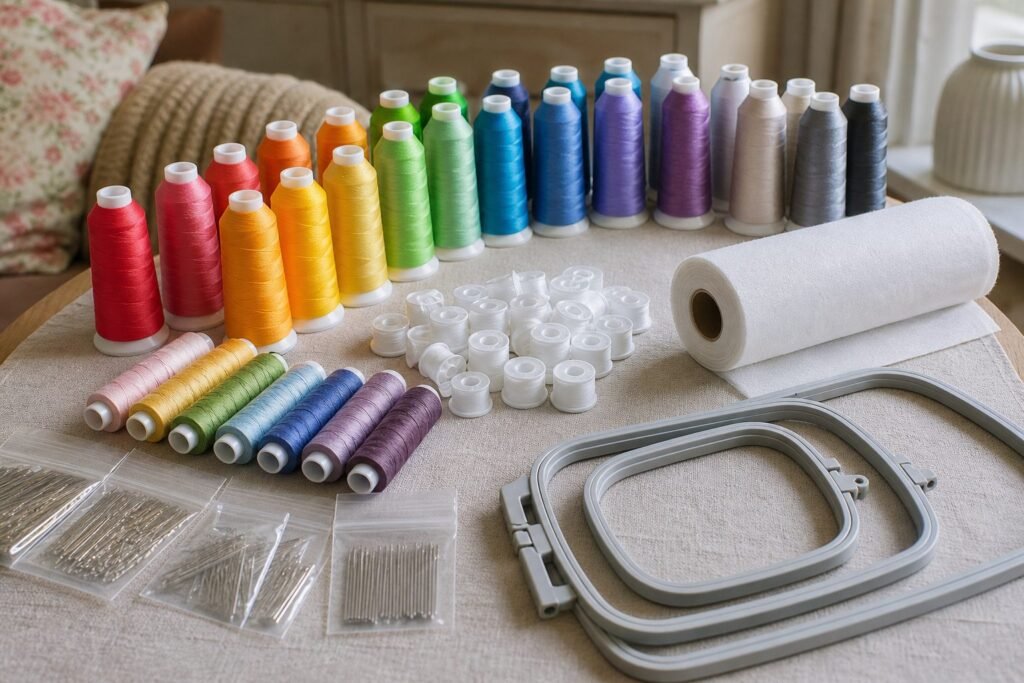
Thread is the most visible running embroidery machine cost. Machine embroidery thread, usually polyester or rayon, comes in many colours, and most projects use several. Starter colour sets are an easy way in, but expect to keep buying the shades you use most. You also need bobbin thread, which is finer and usually white or black, plus a supply of spare bobbins.
Stabiliser
Stabiliser sits behind or on top of the fabric to stop it puckering or stretching. Cut-away, tear-away and wash-away types each suit different fabrics, and nearly every project uses some. It is one of the steadiest parts of your ongoing embroidery machine cost, so buying rolls rather than small packs often works out cheaper.
Needles, hoops and accessories
Embroidery needles wear out and should be changed regularly. Extra hoop sizes, magnetic hoops, cap frames and specialist feet can add a surprising amount, sometimes several hundred pounds if you collect a full set.
Designs and software
Every machine comes with some built-in designs, and you can buy individual design files online. To make your own designs or turn artwork into stitches you need digitising software, which ranges from free basic tools to expensive professional packages. The machine embroidery article on Wikipedia explains how designs are turned into machine formats such as .PES and .DST.
Servicing and space
Embroidery machines need cleaning, oiling where the manual says so, and an occasional professional service. You also need a sturdy table and room for the embroidery arm to move freely. A deep, stable desk such as the ones in our craft desks with storage guide makes a big difference.
How much does an embroidery machine cost for beginners and small businesses?
The answer to how much does an embroidery machine cost depends a lot on who is buying. For a beginner embroidering gifts and personal projects, an entry-level or lower mid-range machine is usually enough. Start with the field size you actually need: if most of your ideas fit inside 10 x 10 cm, a compact machine gives you room to learn without a large outlay.
For a small business, the maths is different. Think about cost per item rather than the machine price alone. Add up thread, stabiliser, needles, blanks, electricity and your time, then compare that with what customers will pay. A multi-needle machine costs far more up front, but automatic colour changes can save hours across a busy week of orders.
Many sewists also already own a sewing machine and wonder whether to upgrade to a combo. If you are still choosing your first sewing machine, our best beginner sewing machine guide covers simpler models that sit alongside a dedicated embroidery machine well.
6 questions to set your budget
Measure the largest design you expect to stitch often.
Whether you need a sewing machine as well.
Each colour means a thread change on one needle.
Business use changes the maths.
Thread, stabiliser, needles and blanks.
Lessons, warranty and servicing.
Buying a used embroidery machine in the UK
If you are asking how much does an embroidery machine cost second-hand, the answer varies with age, field size and what is included. Second-hand machines can bring the embroidery machine cost down considerably, but buy carefully. Ask for the stitch count or service history, check that the embroidery unit and all hoops are included, and test-stitch a design if you can.
Check that the machine is not subject to a product recall and that the manual or instructions are available. The UK government guidance on buying second-hand goods recommends inspecting items in person and asking sellers to confirm nothing has been modified. A reputable dealer selling serviced used machines is usually a safer bet than an unknown private seller.
How to keep embroidery machine cost under control
A little planning stops a new hobby turning into an expensive one, and it keeps your total embroidery machine cost close to what you expected when you started.
It also helps to think about resale value. Well-known brands with good dealer networks tend to be easier to sell on if you later upgrade, which softens the real cost of the first machine. Keep the box, manual, hoops and receipts, and log any services, because buyers of used machines look for exactly those things.
- Decide your typical design size and project types before you shop, then buy the smallest field that covers them.
- Watch for seasonal offers; price cuts of 15 to 20 percent are common on UK listings.
- Buy consumables in starter sets first, then restock only the colours and stabilisers you actually use.
- Learn to edit and combine designs on the machine before paying for advanced software.
- Look after the machine: regular cleaning and the right needles prevent costly repairs.
So, how much does an embroidery machine cost? For most UK home embroiderers the realistic spend is between about £700 and £1,700 for the machine, plus a steady budget for thread and stabiliser. Spend more when your projects genuinely need a bigger field, more needles or business-level output.
Common myths about embroidery machine prices
Stitch quality depends mostly on hooping, stabiliser, thread, needles and a well-digitised design.
Extra money mainly buys a bigger field, more needles and convenience.
Decorative stitches are not the same as hoop embroidery, which needs an embroidery unit that moves the hoop.
Check for an embroidery unit and a stated embroidery field before buying.
Thread, stabiliser, needles, designs and blanks are ongoing costs on every project.
Budget for consumables from the start.
Buy from an established UK seller, check the machine has a UK plug and manual, and look up any recall before buying second-hand. Switch off before changing needles or clearing jams.
Embroidery machine cost FAQs
How much does an embroidery machine cost for a beginner?
Compact embroidery-only machines with a 10 x 10 cm field were listed at roughly £690 to £900 in the UK when we checked, which suits most beginners.
Is a combo machine cheaper than buying two machines?
Often, yes, if you need both. If you already own a good sewing machine, an embroidery-only model usually gives you a bigger field for the money.
How much does a multi-needle embroidery machine cost?
Listings we read put six-needle and ten-needle models at roughly £7,400 to £9,400 before VAT, with commercial multi-head machines priced on quote.
What are the running costs of an embroidery machine?
Expect to keep buying thread, bobbin thread, stabiliser and needles, plus occasional hoops, designs, software and servicing.
Is a second-hand embroidery machine worth it?
It can be, if it comes from a reputable seller with its hoops, embroidery unit and manual, and you can see it stitch first.
So, what should you budget?
- Match the field size to your designs
- Count consumables in your budget
- Consider dealer support and servicing
- Buy second-hand only from trusted sellers
Most UK home embroiderers will spend about £700 to £1,700 on the machine, plus a steady budget for thread and stabiliser. Spend more only when your projects need a bigger field, more needles or business output.