How to Start a New Craft Hobby Without Spending Much Money
You can start a new craft hobby without spending much money: try a craft with what you already own, borrow or buy second-hand, and only upgrade the tools that really matter once you know you love it.
This guide shows you how to pick an affordable craft, where to find cheap or free materials, the mistakes that waste money, and how to keep your hobby low-cost all year.
- Seven simple steps to start for very little
- The cheapest crafts to try first
- Where to find free and cheap craft supplies
- Money-wasting mistakes to avoid
- Try before you buy Test a craft with household items or a borrowed tool before spending money.
- Buy for one project Shop only for your first small project, not for every project you might make.
- Spend on one key tool Save on materials, but get a decent version of the tool you use most.
- Go second-hand Charity shops, scrapstores and swaps are full of cheap, useful supplies.
How to Start a New Craft Hobby Without Overspending
Starting a new craft hobby does not have to mean a big shopping trip, a cupboard full of unopened kits or a pile of tools you only use once. Most crafts can be tried with a handful of basic materials, many of which are already in your home, and the money only needs to come later, once you know you enjoy it.
The biggest cost for most beginners is not the craft itself. It is buying too much, too early, in the first weeks of a new craft hobby, before they know which techniques they like. Crafting on a budget is really about sequencing: try first, learn the basics with simple materials, then upgrade only the one or two tools that make the biggest difference.
If you are still deciding which craft suits you, our guide on how to choose the right craft hobby walks through matching a hobby to your time, space and personality. Once you have a shortlist, the steps below show how to get started for very little money, and how to keep it that way as your skills grow.
7 Steps to Start a New Craft Hobby on a Budget
-
Pick one craft to try
Choose a single craft rather than several at once. Focusing on one keeps costs down and helps you learn faster.
-
Check what you already own
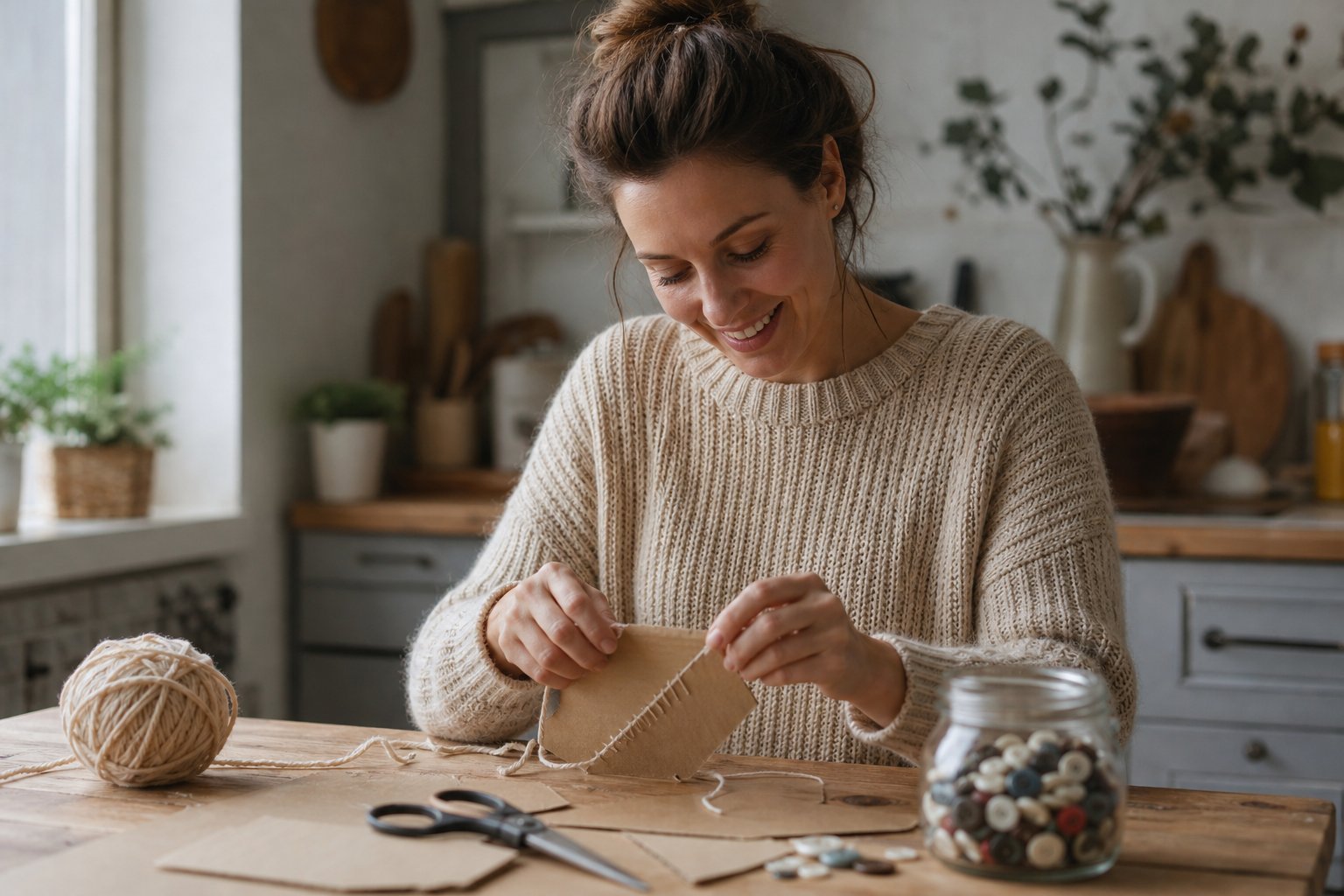
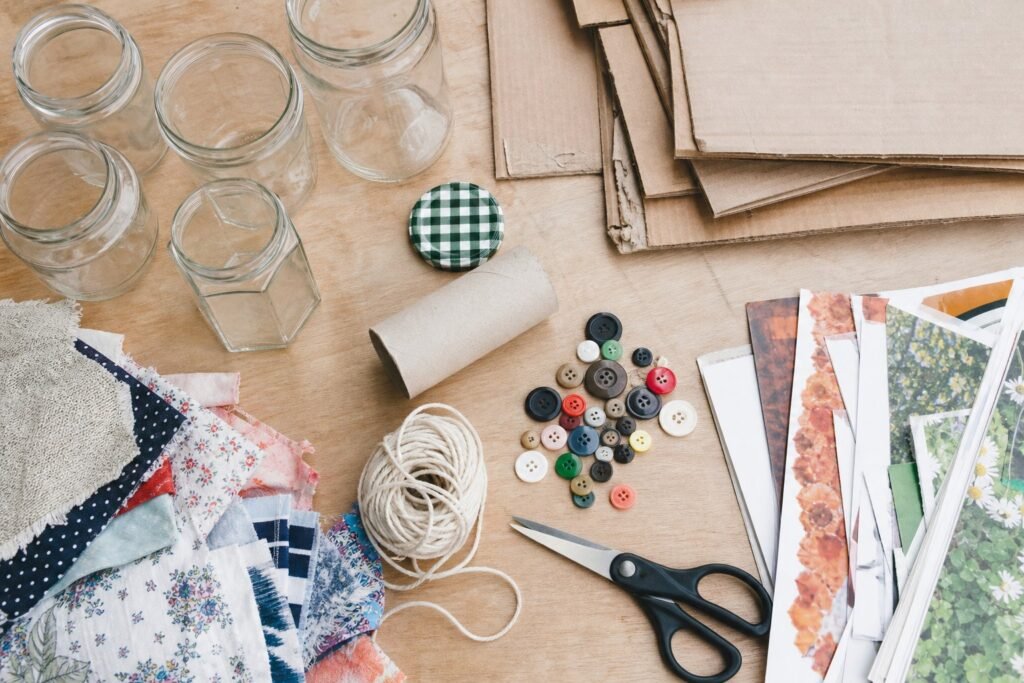
Look through drawers and cupboards for scissors, glue, paper, fabric, jars, buttons and string before buying anything.
-
Learn the basics for free
Use free online tutorials, library books and beginner patterns to understand the core techniques and the true essentials.
-
Choose a small first project
Pick something you can finish in an evening or weekend, such as a card, coaster, small dish or simple scarf.
-
Buy only what that project needs
Make a short list of the missing items and stick to it. Skip big kits and specialist extras for now.
-
Borrow or buy second-hand
Ask friends, try a library of things or check charity shops and swap groups for tools and materials.
-
Review, then upgrade one thing
Once you finish a few projects, upgrade the one tool that held you back most, and keep using cheap materials for practice.
Many libraries, community centres and craft groups run free or low-cost taster sessions where tools and materials are provided. It is the cheapest way to find out whether you enjoy a craft before you buy anything.
Choosing a Low-Cost Craft Before You Start
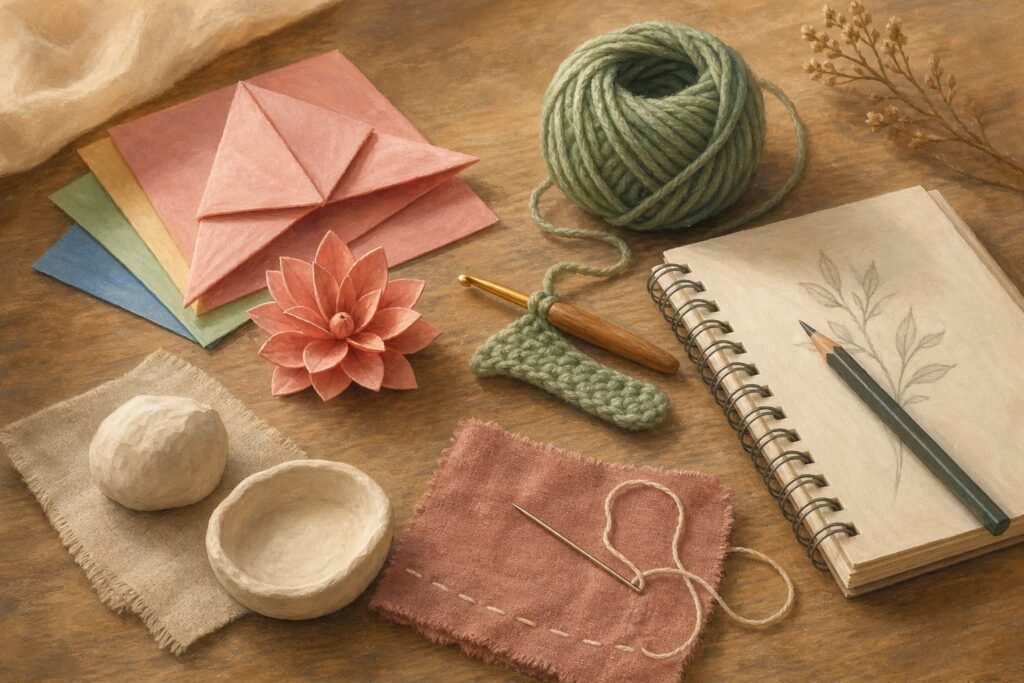
Some crafts are naturally cheaper to begin than others. The cheapest options rely on a few reusable tools and inexpensive consumables, while the costliest need machines, kilns or specialist materials before you can make anything at all. Here is how the most popular beginner crafts compare when money is tight and you want to craft on a budget.
Paper crafts and card making
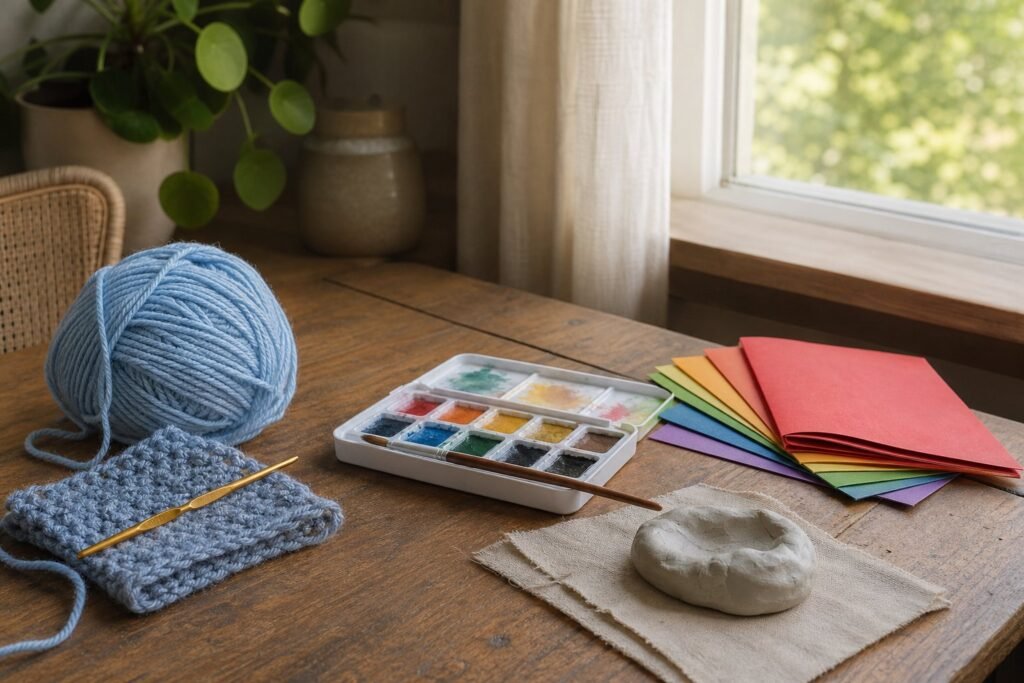
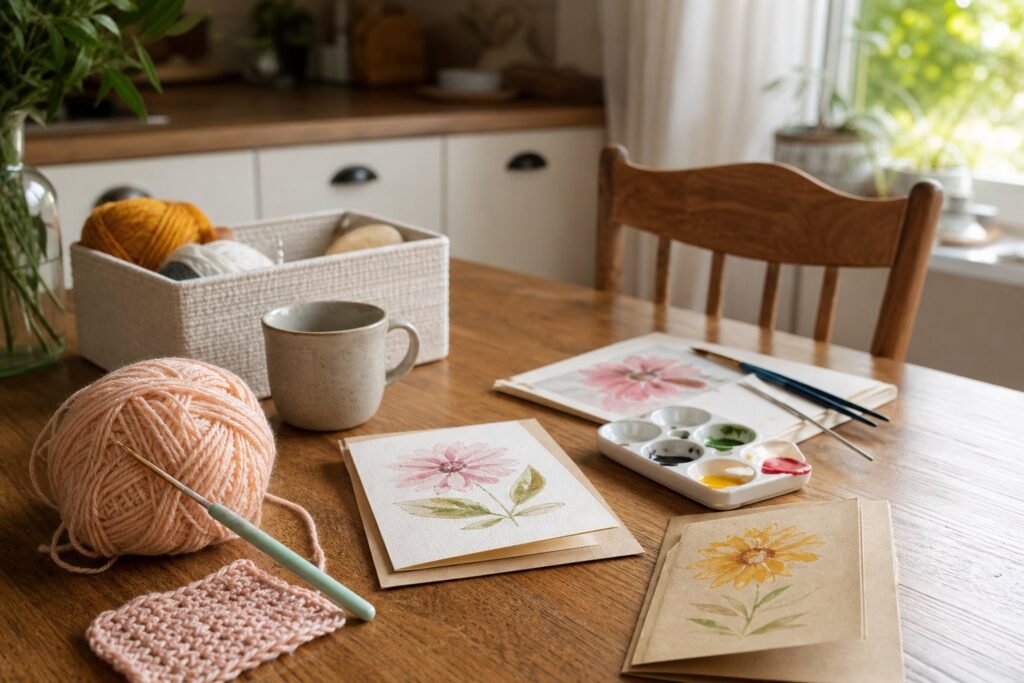
Paper crafts are among the cheapest ways to begin. Scissors, a ruler, glue and scrap paper from packaging, magazines or old books are enough for origami, collage, simple cards and paper flowers. You can add a craft knife and a cutting mat later if you get hooked.
Crochet and knitting
One hook or one pair of needles plus a single ball of medium-weight yarn is enough to learn the basic stitches. Yarn is the ongoing cost, but charity shops and destash sales often sell bags of leftover yarn cheaply, and practice swatches can be pulled out and reused.
Drawing and painting
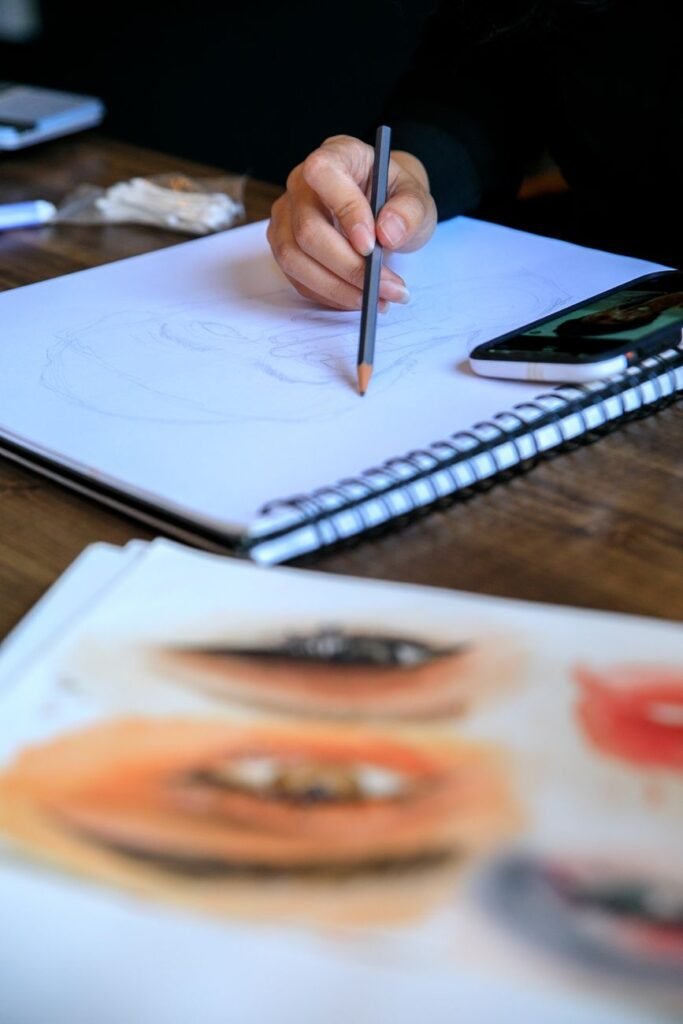
A pencil, an eraser and a sketchbook are all you need to start drawing. If you want to paint, a small student-grade set and two or three brushes are plenty. Avoid large sets with dozens of colours; learning to mix from a few colours teaches you more and costs less.
Air-dry clay
Air-dry clay needs no kiln or oven, and basic shaping tools can be swapped for household items such as cocktail sticks, a butter knife and an old bank card. A single pack is enough for several small dishes, beads or ornaments.
Sewing, mending and upcycling
Hand sewing needs only needles, thread, pins and fabric scissors. Old clothes, bedsheets and pillowcases make excellent free practice fabric, and mending your own clothes saves money from day one. Leave buying a sewing machine until you know you will use it regularly.
Budget Crafting Myths
Most crafts can be learned with a few basic tools and one small project’s worth of materials.
Big kits often include items beginners never use.
Practice materials can be very cheap or recycled. Technique matters far more than price while you are learning.
Expensive materials can make beginners afraid to experiment.
Spending a little more on one key tool, such as good scissors or a comfortable hook, often saves money and frustration.
Poor tools make a craft feel harder and get replaced quickly.
Where to Find Cheap Craft Supplies
Finding cheap craft supplies is easier than many beginners expect, especially if you look beyond craft shops. The best sources are often local, second-hand or free, and they suit a new craft hobby perfectly because you can experiment without worrying about wasting anything precious.
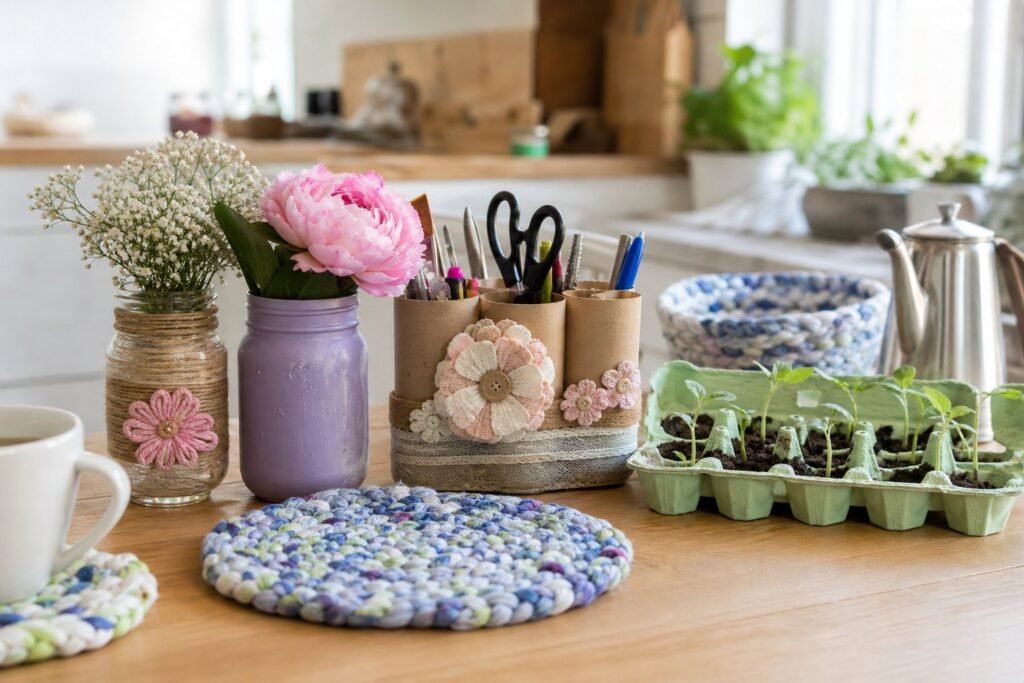
Start with your own home. Cardboard boxes, glass jars, fabric scraps, buttons, ribbon from gifts, wrapping paper and old magazines are useful in dozens of crafts. Next, look at charity shops, car boot sales and estate sales, where whole bags of yarn, fabric and half-used craft kits often turn up when people clear out a hobby they have finished with.
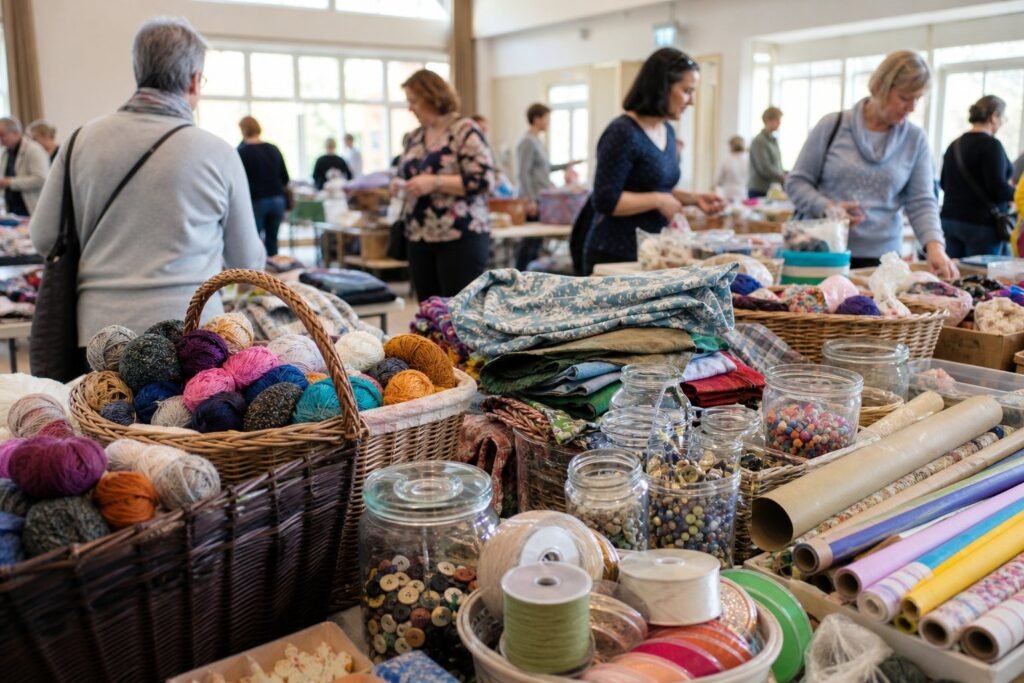
Community scrapstores collect clean waste materials from businesses and sell them cheaply to schools, artists and hobbyists. Some areas also have a library of things where you can borrow equipment such as a sewing machine for a small fee. Local online groups, swap events and freecycling sites are other good places to pick up cheap craft supplies, and you can pass on your own leftovers in return.
Finally, remember that skills can be free too. Public libraries lend craft books, many host free or low-cost workshops, and there are thousands of free video tutorials and patterns online for every technique.
Budget Crafting Terms Explained
- Stash
The collection of craft materials you already own, such as yarn, fabric or paper, waiting to be used.
- Destash
Selling, swapping or giving away supplies you no longer need, often at low prices to other crafters.
- Scrapstore
A community store that collects clean, reusable waste materials from businesses and sells them cheaply for creative projects.
- Library of things
A lending service where you can borrow tools and equipment, such as a sewing machine, instead of buying them.
- Student grade
A cheaper version of art materials, such as paint, made for learning and practice rather than professional work.
- WIP
Short for work in progress: a project you have started but not yet finished.
Common Mistakes When Starting a New Craft Hobby
The most common mistake is buying a complete set of everything before trying the basics of your new craft hobby. Large kits look like good value, but they often include low-quality tools and colours or materials you will never use. Buy for your first project only, and let your next project decide what you buy next.
Another mistake is choosing a first project that is too ambitious. A blanket, a large canvas or a full garment can take weeks, and it is easy to lose motivation halfway through. Pick something small that you can finish in an evening or a weekend, such as a coaster, a greeting card or a small dish, so you build confidence quickly.
Many beginners also buy the cheapest version of the one tool that really matters. Very cheap scissors, blunt hooks or scratchy brushes make a craft feel harder than it is. It is usually better to save on materials and spend a little more on one key tool that you will keep for years.
Finally, try not to compare your early results with experienced makers online. Their work reflects years of practice. Your first attempts are meant to be learning pieces, and keeping them helps you see your progress.
Easy First Projects for Your New Craft Hobby
A good first project uses cheap materials, teaches one or two core techniques and gives you something useful at the end. That combination keeps you motivated and makes every penny count when you craft on a budget.
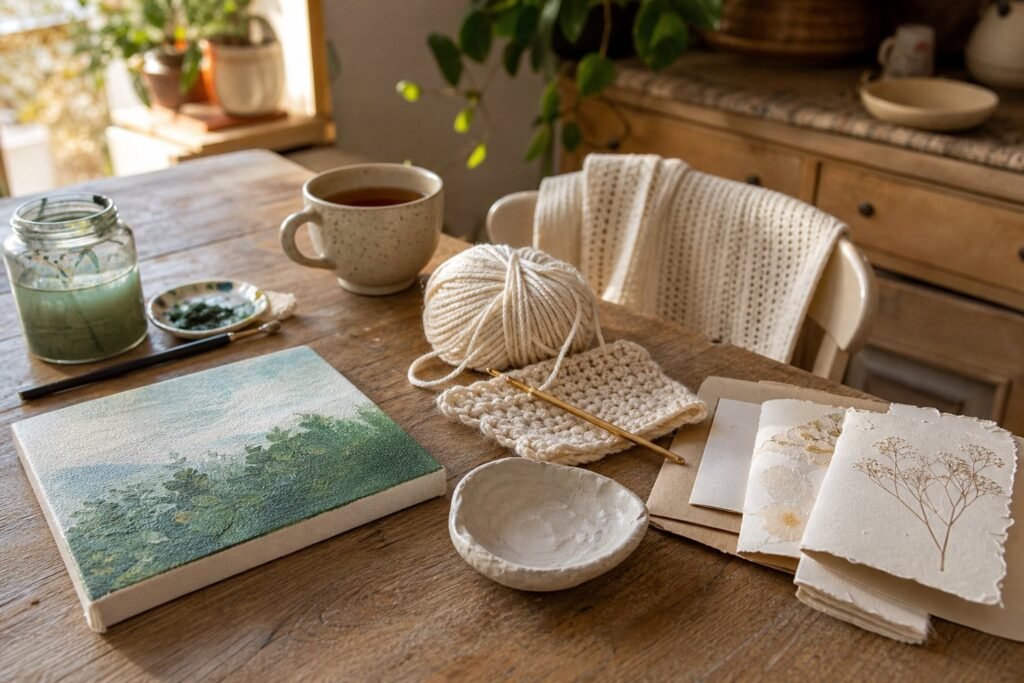
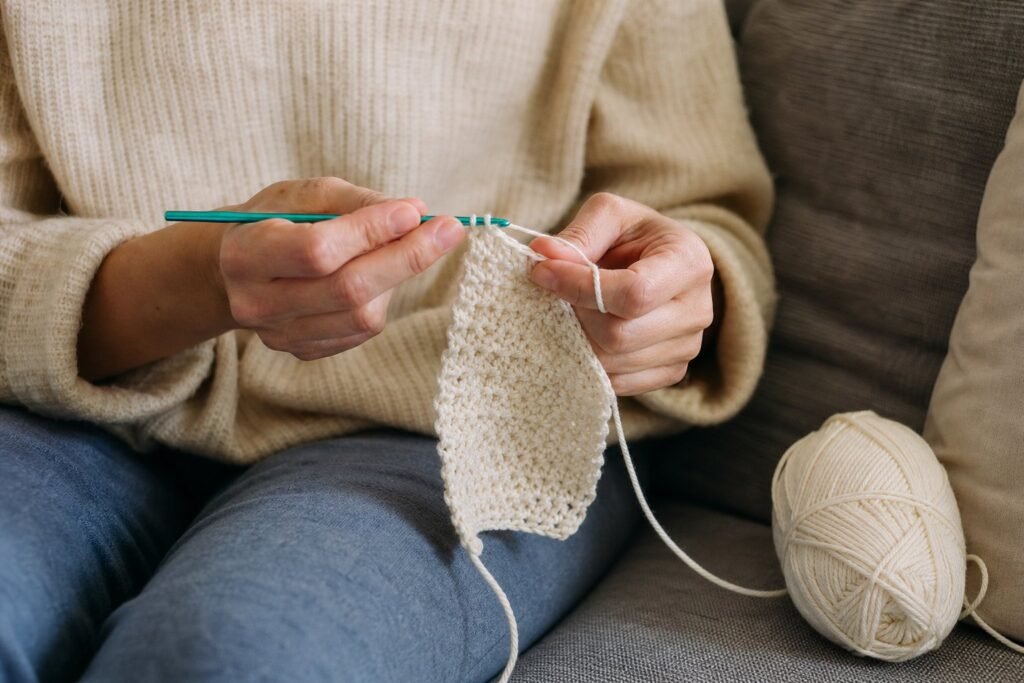
If you are trying paper crafts, make a set of greeting cards or gift tags from packaging and old magazines. For crochet or knitting, a dishcloth or a plain coaster lets you practise even stitches with very little yarn. Drawing beginners can fill a page a day in a cheap sketchbook, which builds skill faster than one large piece.
With air-dry clay, try a small trinket dish or a set of plant labels. If sewing appeals, start by mending a favourite item of clothing or turning an old pillowcase into a simple drawstring bag. Each of these projects can be finished in a few hours, costs little, uses cheap craft supplies and shows you whether the craft is worth more of your time and money.
Keeping Your Craft on a Budget All Year
Keeping a craft on a budget is easier when you plan your spending around the year. Craft shops and online sellers tend to discount seasonal stock after Christmas, Easter and the back-to-school period, so it pays to wait for those sales if you need a bigger item. Make a short wish list and only buy what is on it.
Looking after your tools is one of the easiest ways to craft on a budget, and it matters just as much as buying them cheaply. Clean brushes straight after use, keep scissors for paper and fabric separate, store yarn and paper away from damp and sunlight, and put lids back on glue and paint so they do not dry out. Well-kept tools can last for many years.
It also helps to set a small monthly craft budget and track what you spend. When your stash starts to grow, use up what you already own before buying more, and swap or sell anything you no longer need. That keeps your space tidy and your hobby affordable.
Getting the Details Right
Before you spend anything, check what your chosen craft truly needs for a first project and what can wait. Our guide to what craft supplies beginners need breaks down the essentials for different crafts, so you can see which tools are worth buying and which items you can borrow, reuse or replace with household alternatives or cheap craft supplies from second-hand sources. Use the checklist below to judge whether a craft will stay affordable as you progress, not just on day one.
A new craft hobby that is cheap to start but expensive to continue can catch you out, so look at the ongoing costs of materials as well as the starting kit.
What to Look For in a Budget-Friendly Craft
How much you must spend before your first project.
What each new project costs once you are hooked.
Whether the tools last and work across many projects.
How easy it is to learn without paying for classes.
How much room the craft takes up at home.
Why a Low-Cost Hobby Is Still Worth It
Spending very little does not make the benefits any smaller. A large study of more than 7,000 adults in England found that people who took part in arts and crafts reported greater happiness and life satisfaction, as described in research summarised by the University of Michigan. The researchers noted that crafting is valuable partly because it is so accessible and affordable.
Choosing second-hand and reused materials is also kinder to the planet. As a Loughborough University sustainability article explains, scrapstores and libraries of things cut costs and keep useful materials out of landfill, which makes them ideal places to start a new craft hobby.
Starting a Craft Hobby on a Budget FAQ
What is the cheapest craft hobby to start?
Paper crafts, drawing and hand sewing are among the cheapest because they need only a few basic tools and can use scrap paper or old fabric. Crochet is also low-cost, needing just one hook and one ball of yarn.
How much should I spend on a new craft hobby?
Many beginners spend very little by using household items and second-hand supplies. Set a small budget for your first project only, then decide whether to spend more once you know you enjoy the craft.
Where can I get free craft supplies?
Look around your home for packaging, jars, fabric scraps and old magazines, and check freecycling groups, swap events and friends who are clearing out a hobby. Scrapstores also sell reusable materials very cheaply.
Are craft starter kits worth buying?
A small kit can be handy for one specific project, but large all-in-one kits often include low-quality tools and materials you will not use. Buying just what your first project needs is usually better value.
How do I keep a craft hobby affordable long term?
Use up your stash before buying more, look after your tools, buy larger items in seasonal sales, and swap or sell supplies you no longer need. A small monthly budget also helps.
Start Small, Spend Little, Enjoy More
- Try a craft before buying anything
- Use household and second-hand materials
- Buy only for your first small project
- Invest in one key tool, not a full kit
- Look after tools and use up your stash
You do not need a big budget to discover a craft you love. Try a craft with what you already own, learn for free, finish a small first project and upgrade gradually, and your new hobby will stay affordable as your skills grow.