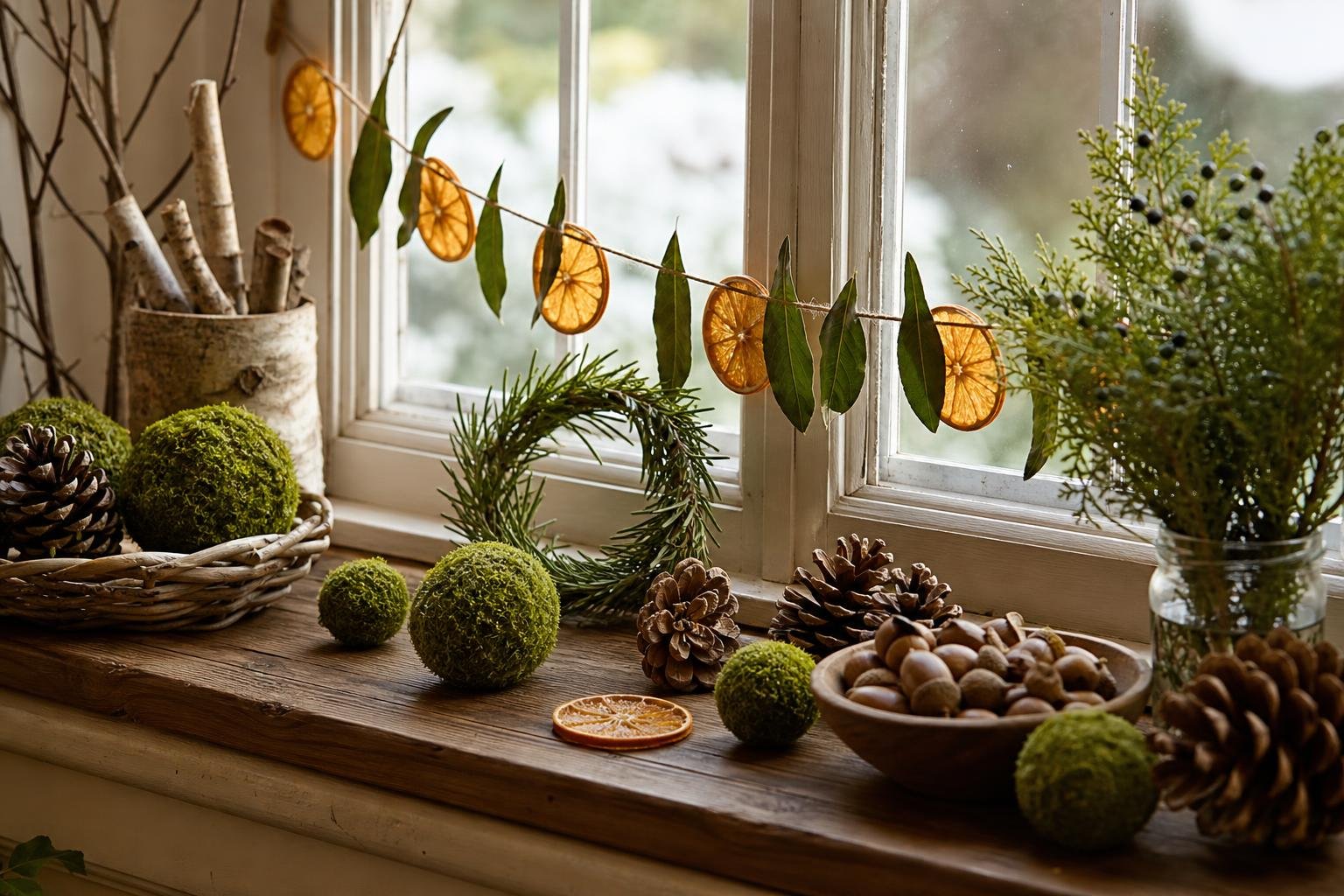
Homemade Christmas decorations made from natural materials bring the quiet beauty of a winter walk into your home. Dried oranges glowing in the window, a rosemary wreath scenting the kitchen, moss and pine cones gathered on a table: these simple pieces feel timeless, calm and genuinely special. They are also among the most sustainable ways to decorate, because almost everything can be composted when the season ends.
This guide shares fifteen homemade Christmas decorations using natural materials, along with practical tips for foraging responsibly, drying fruit and greenery, and storing your pieces so they last. Most projects cost very little, need only basic tools and suit every style from rustic cottage to minimal modern flat.
Why Choose Natural Materials for Homemade Christmas Decorations?
Natural materials have a texture, colour and scent that synthetic decorations cannot copy. The deep amber of a dried orange, the silvery green of eucalyptus and the rich brown of a pine cone create a warm, organic palette that suits almost any home. Homemade Christmas decorations made this way feel connected to the season and the landscape around you.
They are also kind to the planet. Plastic baubles and tinsel can take hundreds of years to break down, while orange slices, greenery and twigs return to the soil within months. Choosing natural materials is one of the simplest ways to make Christmas more sustainable, and it costs far less too.
Finally, gathering materials is a joy in itself. A crisp walk through the park or woods to collect cones and fallen branches is a lovely way to spend a winter afternoon. If you love this style, our guide to rustic Christmas decoration ideas has many complementary projects.
Where to Find Natural Materials
Your garden is the first place to look. Evergreens such as holly, ivy, bay, rosemary, conifer and box can all be trimmed lightly for decorations. Seed heads, dried hydrangeas and ornamental grasses left standing over winter are perfect for wreaths and arrangements.
Parks and woodland paths offer fallen pine cones, acorns, beech nuts, sweet chestnut husks and twigs. Collect only what has already fallen, take small amounts and leave plenty behind for wildlife. Check local rules, as collecting is not allowed in some nature reserves and protected sites.
Your kitchen holds the rest. Oranges, lemons, apples, cinnamon sticks, star anise, cloves and bay leaves are all classic ingredients for homemade Christmas decorations. A florist or market stall can supply eucalyptus, pine and dried flowers if your garden is bare.
15 Homemade Christmas Decorations Using Natural Materials
1. Dried Orange Garland
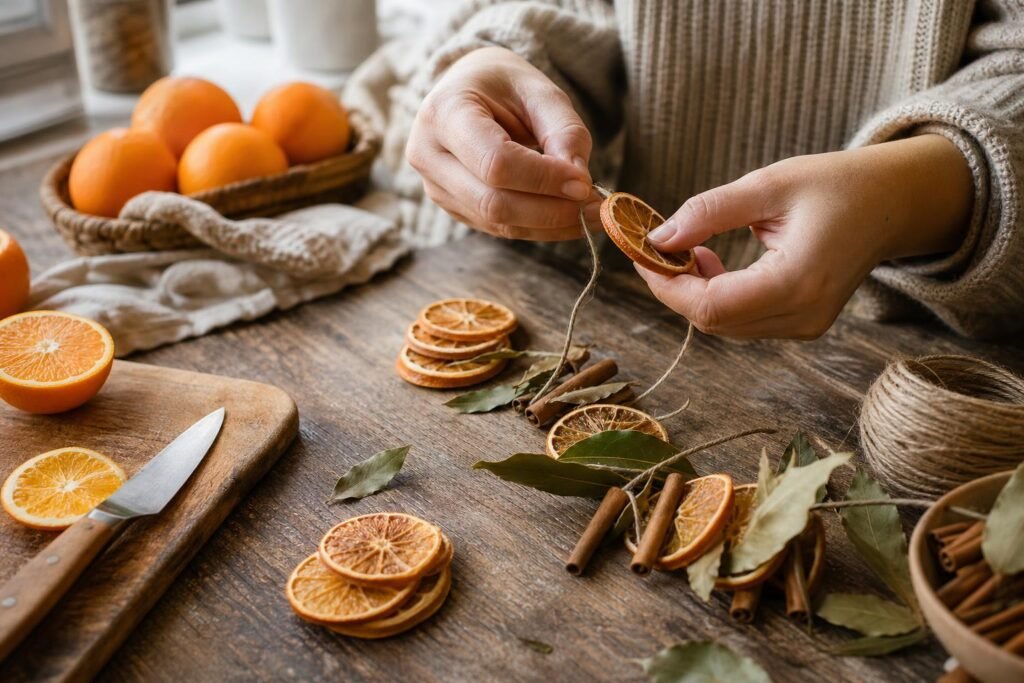
Slice oranges about five millimetres thick, pat them dry and bake on a wire rack at around 100°C for three to four hours, turning every hour, until fully dry and slightly translucent. Thread them onto cotton cord with bay leaves and cinnamon sticks between them. This is the classic among natural homemade Christmas decorations, and it glows beautifully in front of a window or fairy lights.
2. Rosemary Wreath
Bend a few long, flexible rosemary stems into a small circle and secure them with florist wire, or wire short sprigs onto a willow ring. Add a ribbon of natural linen. It makes a fragrant kitchen decoration, and you can snip sprigs for cooking throughout December.
3. Pine Cone Garland
Screw tiny eye hooks into the base of pine cones and thread them onto cord, alternating with dried orange slices or wooden beads. Leave them natural or dab the tips with white paint for frost.
4. Moss Balls
These are among the softest homemade Christmas decorations you can make. Glue preserved moss around polystyrene or paper balls, then tie with twine for hanging or pile them in a bowl. They add a soft, woodland texture to trees and tables.
5. Bay Leaf Stars
Glue dried bay leaves onto a card star shape, overlapping them like feathers, and add a cord loop. The leaves curl slightly as they dry, giving a lovely textured finish.
6. Foraged Table Centrepiece
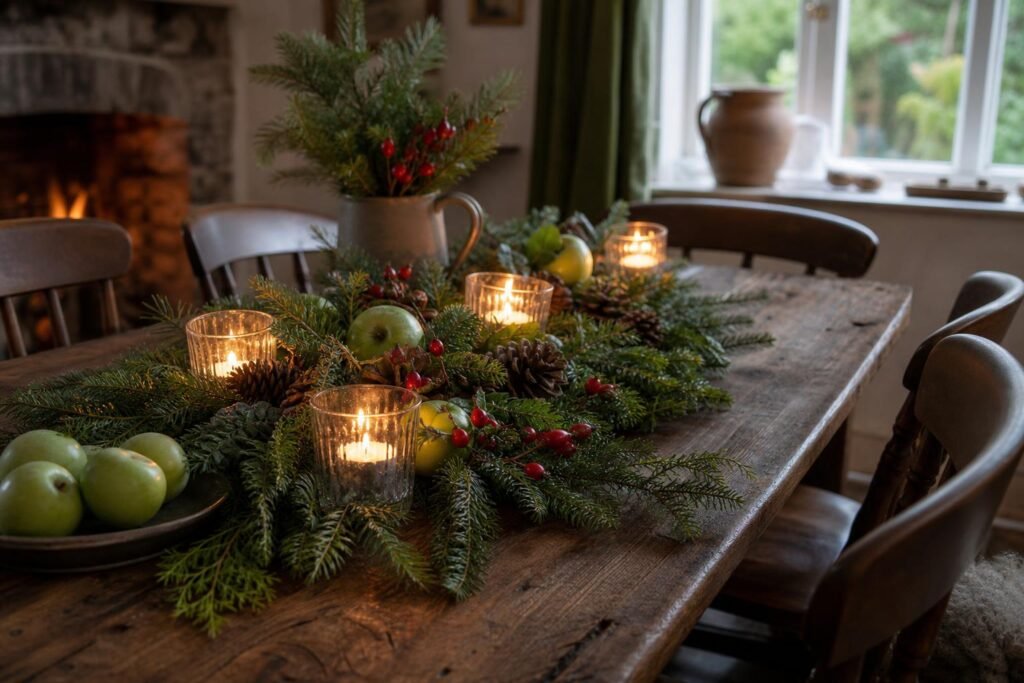
Lay a runner of mixed greenery down the table and tuck in pine cones, rosehips, apples and tea lights in glass holders. It looks abundant and costs almost nothing.
7. Birch Twig Stars
Tie five straight birch twigs together at the points with twine to make a star. The pale bark looks beautiful in Scandinavian-style homes, especially with a string of warm lights wound around it.
8. Dried Apple Ornaments
Slice apples horizontally to reveal the star pattern in the middle, dry them in a low oven for several hours and thread with cord. They look like delicate wooden stars.
9. Cinnamon Stick Trees
Spices make wonderfully fragrant homemade Christmas decorations. Glue cinnamon sticks of decreasing length onto a twig trunk to create a tiny tree shape, then add a star anise on top. They smell wonderful and make pretty gift toppers.
10. Seed Head Wreath
Wire dried seed heads such as poppy, teasel, allium and grasses onto a willow ring. The textures are fascinating, and the wreath lasts indefinitely.
11. Acorn Cap Ornaments
Glue tiny felt balls or painted beads into acorn caps, add a small loop of thread and hang them on a branch or small tree. They look like miniature woodland baubles.
12. Walnut Shell Boats or Ornaments
Crack walnuts carefully in half, clean out the shells and glue a cord loop inside, or fill them with a tiny sprig of greenery. Gild the outside with gold paint for a classic Victorian touch.
13. Eucalyptus Garland
Bind bunches of eucalyptus onto a length of cord with florist wire to make a long, fragrant garland for the mantel or banister. As it dries, it keeps its shape and silvery colour.
14. Dried Hydrangea Wreath
Garden flowers make some of the prettiest homemade Christmas decorations. Cut hydrangea heads from the garden in early winter when they have dried naturally on the plant, then wire them onto a ring. The faded pinks, blues and greens look beautifully vintage.
15. Feather and Twig Mobile
Tie fallen feathers, small cones and slices of wood to a horizontal twig at different lengths, then hang it in a window. It moves gently in the air and casts lovely shadows.
-
Slice evenly
Cut oranges into 5 mm slices using a sharp knife so they dry at the same rate.
-
Blot thoroughly
Press the slices between kitchen paper to remove as much juice as possible.
-
Bake low and slow
Lay them on a wire rack over a baking tray at about 100°C for three to four hours.
-
Turn regularly
Flip the slices every hour so they dry evenly and do not stick.
-
Finish air drying
Leave them on a rack in a warm room overnight before threading or storing.
Supplies for Natural Homemade Christmas Decorations
Most natural materials are free, but these four supplies make projects quicker and more reliable.
| Best for | Skill level | Our score | ||
|---|---|---|---|---|
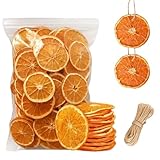
Dried Orange Slices
Best time saver
|
Garlands, wreaths | None needed | 8.9/10 | Check price |
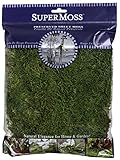
Preserved Moss
Best for texture
|
Moss balls, centrepieces | Beginner | 8.6/10 | Check price |

Grapevine Wreath Ring
Best natural base
|
Herb and foraged wreaths | Beginner | 8.8/10 | Check price |

Cotton Cord
Best plastic-free string
|
Hanging, threading | None needed | 8.5/10 | Check price |
Ready-dried orange slices are a time saver if you need a lot or your oven is busy. Preserved moss stays soft and green for years and adds instant woodland texture. A woven grapevine wreath ring is the ideal natural base for herb, seed head and foraged wreaths, and natural cotton cord keeps every garland and ornament plastic-free.
How to Make Natural Decorations Last
Drying is everything. Fruit, flowers and leaves need to be completely dry before you store them. Any moisture left inside will cause mould, especially if they are packed away in a cupboard. If in doubt, leave them on a rack in a warm room for a few extra days.
Keep fresh greenery cool. Wreaths and garlands made from fresh foliage last longest away from radiators and fires. Mist them with water every few days and hang outdoor wreaths in a sheltered spot.
Seal where appropriate. A light spray of matte varnish can protect pine cones, seed heads and dried fruit from dust and handling, though it does make them unsuitable for composting.
Store carefully. Wrap dried decorations in tissue paper and keep them in a breathable box or tin with a sachet of rice to absorb moisture. Avoid damp lofts and garages.
Styling Natural Homemade Christmas Decorations
Natural homemade Christmas decorations look best grouped and layered. A window with a dried orange garland, a birch star and a few moss balls feels abundant and cohesive. On a table, mix greenery, cones and fruit in a long, low arrangement.
Pair natural materials with warm light. Fairy lights, candles and lanterns bring out the colours of dried fruit and wood. Keep colours earthy: green, brown, amber, cream and a touch of red from berries or ribbon.
Mix textures for interest. Smooth apples, rough bark, soft moss and glossy holly together create a display that feels rich even though it is simple.
Natural Decorations and Safety
Some natural materials need care around children and pets. Holly berries, mistletoe and ivy are toxic if eaten, so keep them out of reach. Dried greenery is flammable, so never place candles close to wreaths, garlands or centrepieces. Use LED candles and fairy lights wherever possible.
When foraging, wash your hands after handling materials and check everything for insects before bringing it inside. Baking pine cones at a low temperature for half an hour is a simple way to clean them.
When Christmas is over, remove any wire, ribbon or hooks and add your fresh greenery, fruit and untreated natural decorations to the compost bin or garden waste collection.
Natural Decorations as Gifts
Many of these homemade Christmas decorations make thoughtful, sustainable gifts. A rosemary wreath for a friend who loves cooking, a dried orange garland in a kraft box or a set of bay leaf stars tied with cord all feel personal. Wrap them in brown paper and tie with twine for a natural finish that matches the gift inside.
For more sustainable ideas, our easy DIY Christmas decorations guide covers simple projects using free materials, and our traditional Christmas crafts list includes classic pomanders and garlands. You can also read about the long history of the pomander and other natural scented decorations.
A Seasonal Calendar for Natural Decorations
Timing helps when you work with nature. In October and early November, cut hydrangea heads, seed heads and grasses on a dry day and hang them upside down somewhere airy to finish drying. Collect pine cones and acorns on autumn walks while they are plentiful.
In mid-November, dry orange and apple slices so they are ready for garlands, and make any homemade Christmas decorations that need to be posted as gifts. Bay leaf stars and moss balls can be made at any time.
In early December, make fresh greenery projects such as rosemary wreaths, eucalyptus garlands and foraged centrepieces. Made too early, they may dry out before Christmas Day.
After Twelfth Night, sort your decorations into keep and compost. Dried fruit, seed heads and wooden pieces can be packed away, while fresh greenery goes on the compost heap.
Homemade Christmas Decorations with Children and Friends
Natural crafts are wonderful for sharing because the materials are safe, cheap and plentiful. Organise a foraging walk with friends, then return home to make garlands and wreaths together. Everyone can choose their own combination of fruit, leaves and cones, so each piece is unique. It is a gentle, sociable way to welcome the season.
Homemade Christmas Decorations: Frequently Asked Questions
What natural materials can I use for homemade Christmas decorations?
Oranges, apples, cinnamon, bay leaves, rosemary, pine cones, twigs, moss, seed heads, dried hydrangeas, eucalyptus, holly and ivy are all excellent.
How long do dried orange decorations last?
When fully dried and stored somewhere dry, they can last for several years, though their colour may fade slightly over time.
Is it legal to forage for Christmas decorations?
Collecting small amounts of fallen material for personal use is generally fine on public land, but rules vary. Never uproot plants or collect from protected nature reserves without permission.
Can I compost natural decorations?
Yes, as long as they are untreated. Remove any wire, ribbon, glue or varnish first, then add them to your compost or garden waste.
Final Thoughts
Homemade Christmas decorations made from natural materials are beautiful, sustainable and deeply satisfying to make. Dried oranges, rosemary wreaths, moss balls and foraged centrepieces bring the calm of nature indoors.
Forage kindly, dry everything thoroughly and compost what you can at the end of the season.