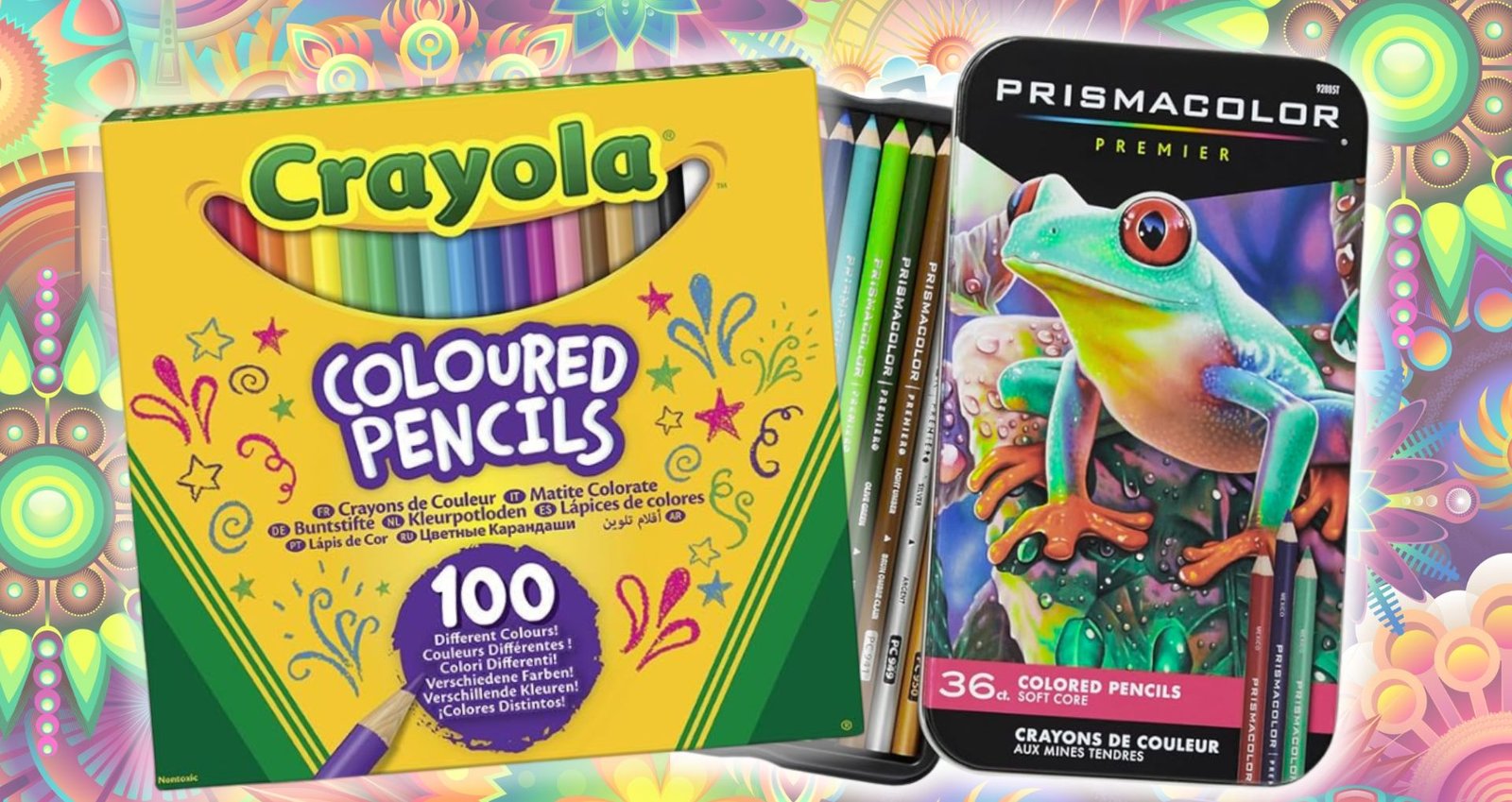
Can the classic charm of Crayola truly outshine the artist’s favorite, Prismacolor, or will vibrant color and smooth application win your creative heart?
Are you ready to unleash your inner artist? 🎨 In this colorful showdown, we’ll dive into the world of Crayola and Prismacolor colored pencils. We’ll explore their unique features and how they perform on paper so you can choose the perfect set to bring your visions to life!
Best for Kids
These colored pencils stand out for their vibrant colors and ease of use, making them ideal for both beginners and experienced artists. They offer great value for the price, especially with the 100 count set.
Best for Artists
Renowned for their rich pigmentation, these colored pencils excel in blending and application, making them a favorite among serious artists. However, the higher cost and fewer colors may not suit every budget.
Crayola 100 Count
Prismacolor 36 Pack
Crayola 100 Count
- Large variety of colors
- Pre-sharpened for convenience
- Smooth application and blending
- Durable and long-lasting
- Affordable price for the quantity
Prismacolor 36 Pack
- Highly pigmented for vibrant colors
- Excellent blendability
- Soft core for easy application
- Suitable for detailed artwork
- Good for various paper types
Crayola 100 Count
- Limited color range in large packs
- Not as pigmented as higher-end brands
Prismacolor 36 Pack
- Higher price point for fewer pencils
- Soft core may wear down quickly
Brand Overview
When it comes to colored pencils, Crayola and Prismacolor have established themselves as prominent names in the art supply industry, each catering to a slightly different audience.
Crayola
Founded in 1885, Crayola has become synonymous with childhood creativity. Initially focused on crayons, the brand expanded its product line to include colored pencils and markers, making it a household name for parents and children alike. Crayola products are designed for all ages, promoting creativity in young artists while also appealing to adult hobbyists. The brand is known for its wide array of vibrant colors and reliable quality, making it a popular choice for fun and casual art projects.
Prismacolor
In contrast, Prismacolor has carved out a niche for itself within the professional art community. Established in the 1930s, this brand specializes in high-end colored pencils known for their pigmentation and blendability. Designed primarily for artists and serious hobbyists, Prismacolor pencils are favored for their soft cores, which allow for detailed work and smooth application. Artists appreciate these pencils for their ability to layer and blend colors effectively, making them ideal for intricate illustrations and fine art.
Both brands, while different in target audience and product range, stand out due to their commitment to quality and creativity, ensuring artists of all levels have the tools they need to express themselves through color.
Product Features Comparison
In this section, we will compare the key features of both products, including the number of colors, pencil core type, and packaging. We will delve into what each brand offers in terms of variety and usability.
Number of Colors
Pencil Core Type
Crayola: Featuring a durable, standard pencil core, these colored pencils are pre-sharpened for immediate use and provide consistent color application, suitable for general sketching and coloring in various projects.
Prismacolor: Known for their soft core, Prismacolor pencils allow for smoother application and better blending capabilities. This characteristic makes them ideal for artists who demand more from their colored pencils, especially for fine details.
Packaging
Crayola’s packaging is user-friendly, often including a sturdy box that keeps the pencils organized and easy to access, making it great for casual or educational settings.
Prismacolor’s packaging tends to be more professional, often including a tin or sturdy case that appeals to serious artists, contributing to the longevity of the pencils and maintaining their quality.
By examining these key features, both Crayola and Prismacolor offer unique advantages depending on your coloring needs—be it variety, usability, or artistic detail.
Feature Comparison
Performance and Usability
In this section, we will evaluate how each colored pencil performs on paper. Factors such as color vibrancy, blending ability, and ease of sharpening will be discussed to determine which brand excels in user experience.
Color Vibrancy
Blending Ability
Crayola: While Crayola colored pencils can be blended reasonably well, artists looking for more sophisticated layering and blending techniques may find them less satisfactory. They work best for basic blending and color mixing in casual projects.
Prismacolor: The soft core of Prismacolor pencils allows for smooth application and exceptional blending capabilities. Artists love how easily they can layer colors to create gradients and subtle transitions, making them a favorite among those focused on more intricate artwork.
Ease of Sharpening
Crayola: These pencils sharpen easily and maintain a good point without too much hassle, enhancing their usability for both adults and children. They come pre-sharpened and can withstand regular sharpening without breaking often.
Prismacolor: The soft cores can result in a faster wear-down rate, which means they require more frequent sharpening. However, the creamy texture can make sharpening a breeze, permitting a fine point to be achieved effortlessly.
Both Crayola and Prismacolor deliver a user-friendly experience, but the choice will ultimately depend on your specific needs—whether for fun or for serious artistic endeavors.
Value for Money
When comparing the financial aspect of Crayola Colored Pencils (100 Count) and PRISMACOLOR 92885T Premier Colored Pencils (36 Piece), it’s important to assess not only the price but also the quality and satisfaction derived from each product.
Pricing
Crayola: Priced around 19 GBP for 100 pencils, this translates to approximately 0.19 GBP per pencil. With such a vast array, this set is budget-friendly and ideal for casual users and families.
Prismacolor: At about 39 GBP for 36 pencils, the cost per pencil is around 1.08 GBP. This higher price reflects the premium quality that artists seek, but it does require a larger investment for those who need fewer pencils.
Overall Value Analysis
Crayola:
- Pros:
- Excellent quantity for the price.
- Durable and pre-sharpened for immediate use.
- Bright colors, suitable for general art and recreational purposes.
- Cons:
- May lack the pigmentation depth of professional brands.
- Limited effectiveness for serious artists.
Prismacolor:
- Pros:
- Highly pigmented colors, perfect for detailed artwork.
- Superior blendability and ease of application enhance the artistic experience.
- Cons:
- Fewer pencils for a higher price makes it less appealing for casual users.
In conclusion, if you’re looking for a high-quality art experience and are focusing on detailed projects, the additional investment in Prismacolor may be worth it. However, for general use and a cost-effective option, Crayola certainly offers substantial value and performance for its price.
Conclusion: Final Verdict
After comparing Crayola and Prismacolor colored pencils on various fronts, it’s clear that Crayola Colored Pencils (100 Count) emerge as the go-to option for casual users and families, thanks to their incredible value, vibrant colors, and ease of use. Their cost-effectiveness makes them ideal for any age group, especially beginners.
On the other hand, Prismacolor Premier Colored Pencils are perfect for serious artists focusing on detailed work, offering superior pigmentation and exceptional blending capabilities. If you’re ready to invest in your artistry, these pencils are the way to go. Which will you choose for your next artistic endeavor?