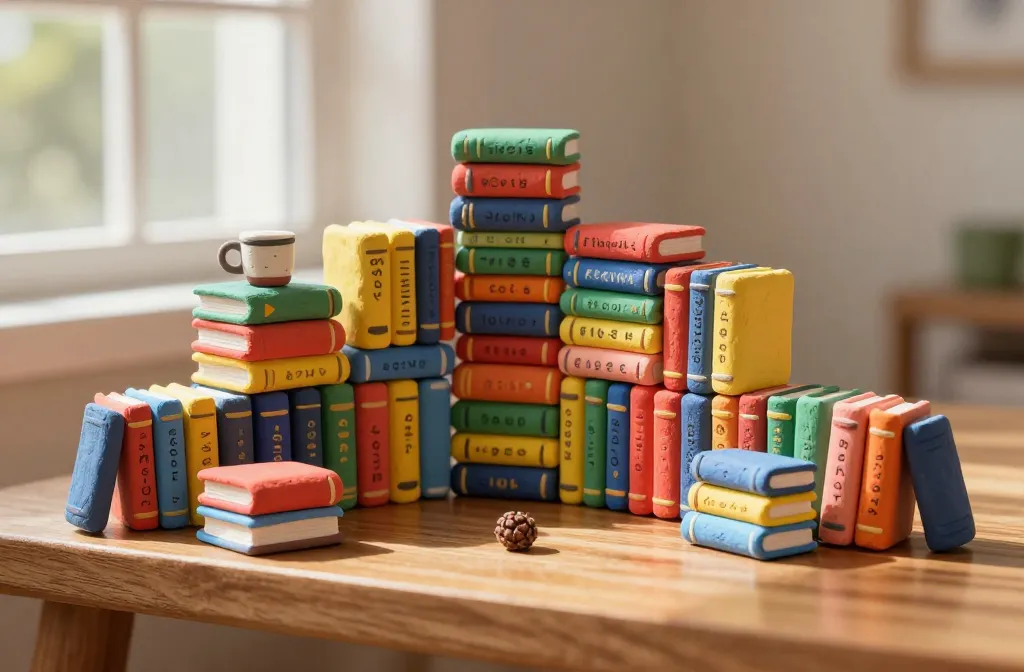
An intro that cuts to the chase: tiny clay books for dollhouses are the kind of tiny chaos that makes hobbyists grin. They’re quirky, customizable, and oddly satisfying to craft. If you’ve ever wanted a tiny library on a shelf that stays cute and sturdy, you’re in the right place.
What makes clay books so irresistible for dollhouses?
You’re not imagining things—these little volumes have real personality. Clay books are durable, easy to shape, and come in every color under the sun. They let you tailor a scene: a cozy family library, a magical fairy-tantamount tome, or a desk stack so tall it looks like a tiny literacy revolution. FYI, they photograph surprisingly well too, which means Insta love for days.
Choosing the right clay and tools
– Clay types: polymer clay for durability, air-dry clay for quick projects, or epoxy clay if you want extra heft.
– Colors: gather a bookshelf of neutrals plus bold pops for spine titles.
– Tools: blade or precision knife, rolling pin, craft glue, and a fine brush for detailing.
– Substrates: use a smooth surface to avoid fingerprints on the spines.
Deeper dive: how to stop your books from turning into blobbery
Keep your clay cool and your hands clean. Work in small batches, and don’t over-knead the clay. Texture is your friend: a tiny relief line can mimic a paper spine. Bake or cure according to your material’s instructions, and let things cool fully before assembly.
Design tricks: making the spines look legit
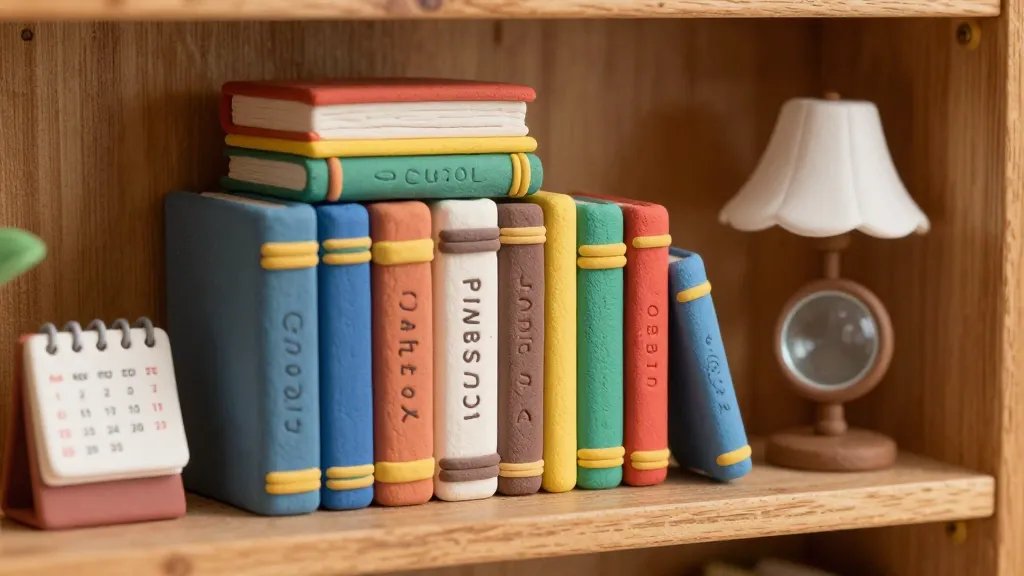
Lithographic style spines aren’t necessary, but they help sell the illusion. Try these:
– Create varied spine widths to mimic real books.
– Add tiny painted letters or embossed patterns for that lived-in library vibe.
– Use metallic gel pens sparingly for gold-foil accents on a few select volumes.
– Stack a few differently angled books for a casual, “just shelved” look.
Typography tips for tiny titles
Keep text readable at a scale. Short, bold words work best: “Fairy Tales,” “Classics,” “Recipes.” Use a fine brush or a thin ink pen to craft clean letters. If your handwriting isn’t printer-perfect, embrace charming wobble—character wins.
Storytelling through a bookshelf
A shelf isn’t just a shelf when you fill it with tiny tomes. Let the book titles tell a story about the dollhouse inhabitants. A stack of gardening guides beside a miniature recipe book says the family loves cooking and plants. A shelf with “Magic” and “Adventure” titles hints at fantastical evenings. The tiny world becomes yours to narrate, one clay spine at a time.
Subsection: themed mini-libraries
– Cozy cottage corner: a few warm-hued volumes, a velvet bookend, and a teacup on the shelf edge.
– Vintage study: dark spines with gold lettering, a pocket watch charm as a bookend.
– Fantasy loft: iridescent, shimmering covers with moon motifs.
Practical crafts: assembling the tiny library
– Measure your shelf space: know how many books you’ll fit without crowding.
– Plan a color rhythm: alternate light and dark shades to avoid a flat look.
– Seal and protect: a light varnish keeps clay looking fresh and prevents chipping.
Subsection: creating believable book stacks
Not every “book” needs to stand upright. Lean a couple for a casual vibe, or lay a few horizontally to mimic stacked volumes. Glue lightly so you can rotate pieces later if needed.
Finishing touches: accessories and realism
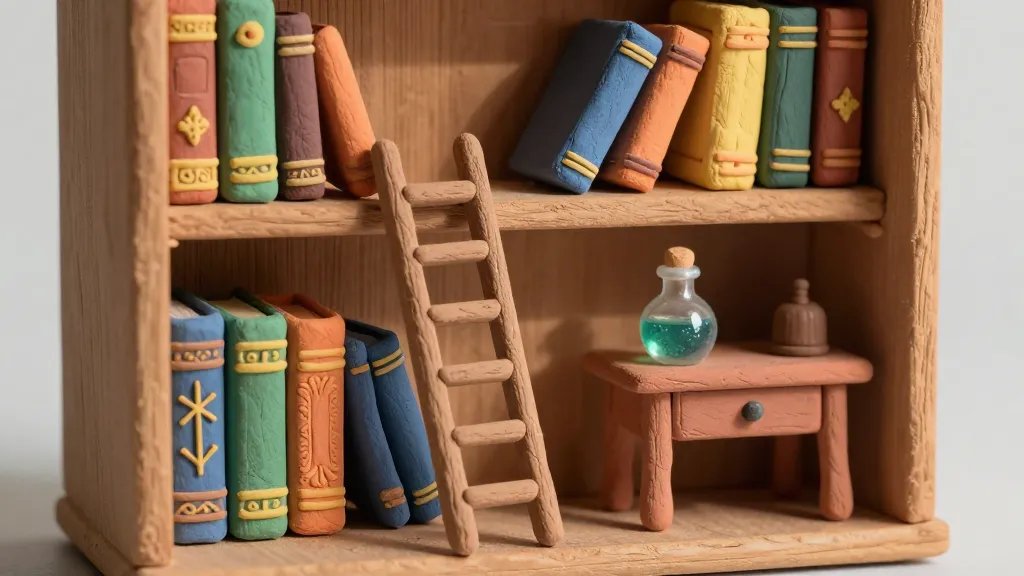
Add tiny items to amp up the realism:
– Tiny labels or bookplates for personalization
– A miniature lamp or candle to suggest a reading nook
– A tiny bookmark protruding from a crack in the spine
– A dust cover or slipcase for a classy touch
Subsection: DIY bookplates
Cut label shapes from clay scraps, flatten slightly, and press a tiny printed label onto the surface. Seal with gloss varnish so the ink doesn’t smudge. A few seconds of effort yields big visuals.
Maintenance and care for clay books
Clay books sip a little moisture, so keep them away from humidity. Store in a dry place and avoid rough handling. If a spine edge gets scuffed, a tiny dab of glue and a gentle press can fix it. IMO, a little routine care keeps the library looking freshly shelved.
Artists’ tips: turning this into a tiny business or hobby hustle
If you’re thinking about selling or gifting, you’ve got options:
– Limited-edition runs: create 5–10 spellbound sets with unique spine art.
– Custom orders: invite buyers to name a few spine titles.
– Display setups: photograph scenes with your books in action—coffee cups, tiny teapots, and warm lighting do wonders.
Pricing and scalability
Start small, then grow. Price per set includes clay materials, time, and the “wow” factor. Track your hours, keep a few backstock pieces, and offer customization for extra value.
FAQ
What clay works best for tiny books?
Polymer clay yields durable, long-lasting pieces that bake hard. Air-dry clay is great if you want a quick, zero-bake project. Epoxy clay gives heft and a strong finish for heavy shelves.
How do you keep the spines from cracking?
Work with warm, pliable clay, avoid over-stressing the spine during shaping, and bake or cure according to the product’s directions. A light sealant helps prevent cracking from rough handling.
Can I add text to the spines?
Yes! Use a fine brush or a technical pen for crisp lettering. Short, bold words work best at this scale, and you can seal the letters with a gloss layer to prevent smudging.
Are tiny clay books safe for kids?
They’re generally safe for older kids under supervision. Avoid small, removable parts for very young children, and always check for any sharp edges after shaping.
How do I display them attractively?
Pair your books with a tiny shelf, a lamp, and a cozy blanket-like fabric behind the shelf. Lighting matters—soft, warm tones bring out the textures beautifully. FYI, a tidy, themed vignette makes your work pop on social media.
Conclusion
Tiny clay books bring a big spark to dollhouses. They blend craft sensibility with storytelling, letting you build micro-worlds one spine at a time. Whether you’re aiming for a cozy reading nook or a magical library, these little volumes let your imagination run wild—without needing a real bookstore full of shelf space. Ready to start your tiny library? Grab some clay, a few tools, and a dash of whimsy, and watch the magic come together.