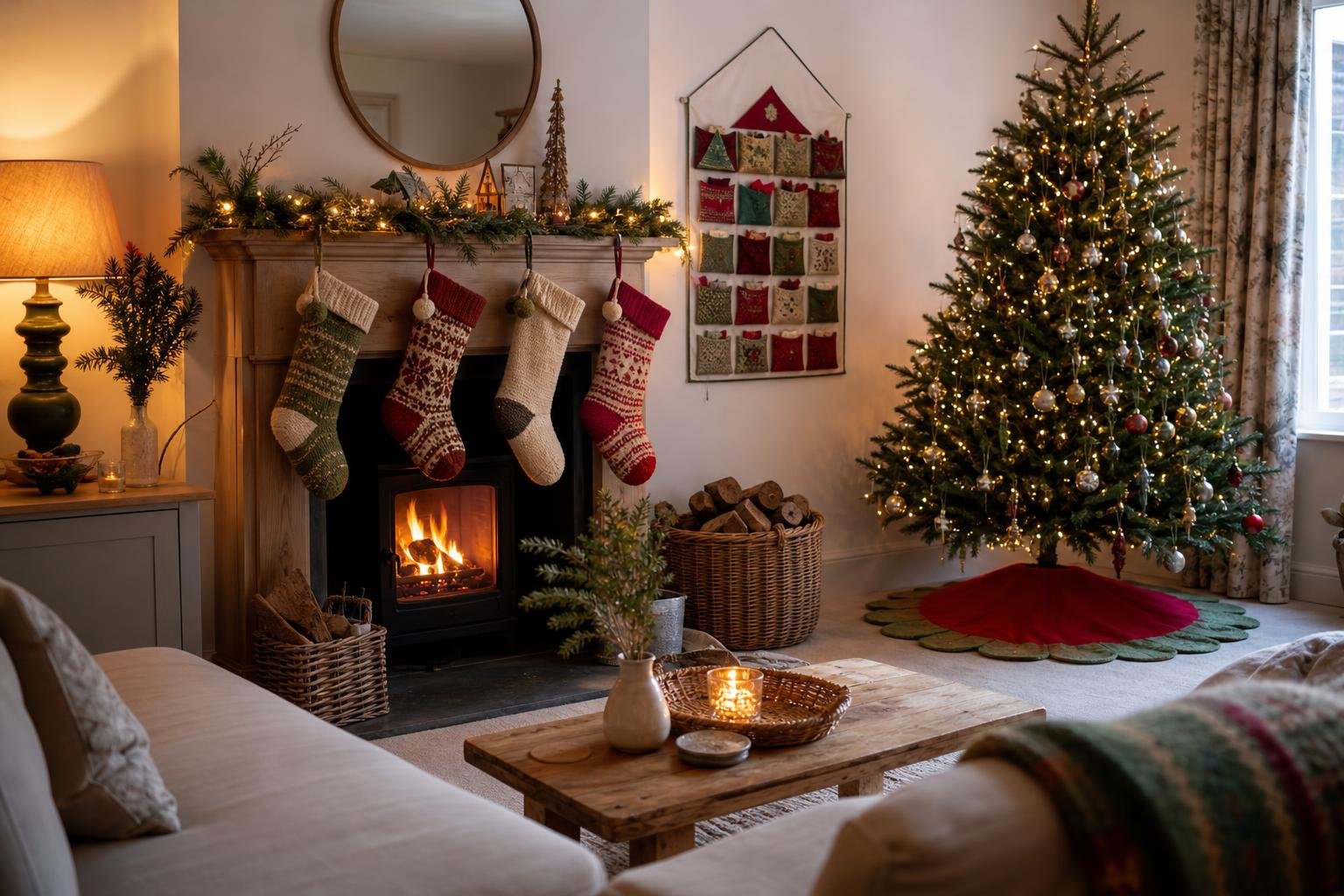
A handmade Christmas decoration does something that a shop-bought one rarely can: it carries a memory. The stocking you stitched the year you moved house, the clay star a friend helped you shape, the advent calendar that comes out every December. This guide is about making those kinds of pieces for your home, the decorations you will unpack with a smile for years to come.
Unlike quick, throwaway crafts, these handmade Christmas decoration ideas focus on quality and longevity. They use felt, fabric, wood, clay and wool, materials that store well and age gracefully. None of them demand expert skills, but they do reward a little patience and care.
Why Choose a Handmade Christmas Decoration?
The appeal of a handmade Christmas decoration goes beyond saving money. Handmade pieces are unique. No one else will have your exact stocking, your exact tree topper or the little wooden village on your shelf, and that individuality makes a home feel lived in and loved.
There is also a quiet pleasure in the making itself. Slow crafts like sewing, embroidery and woodwork give your hands something to do while your mind settles. Many people find that an evening spent stitching a decoration is more restful than any amount of scrolling.
Finally, these are sustainable choices. A well-made handmade Christmas decoration does not end up in landfill after one season. If you are new to crafting, start with our gentler Christmas craft ideas for adults, then come back here for projects with more staying power.
Heirloom Handmade Christmas Decoration Ideas
1. Personalised Felt Stockings
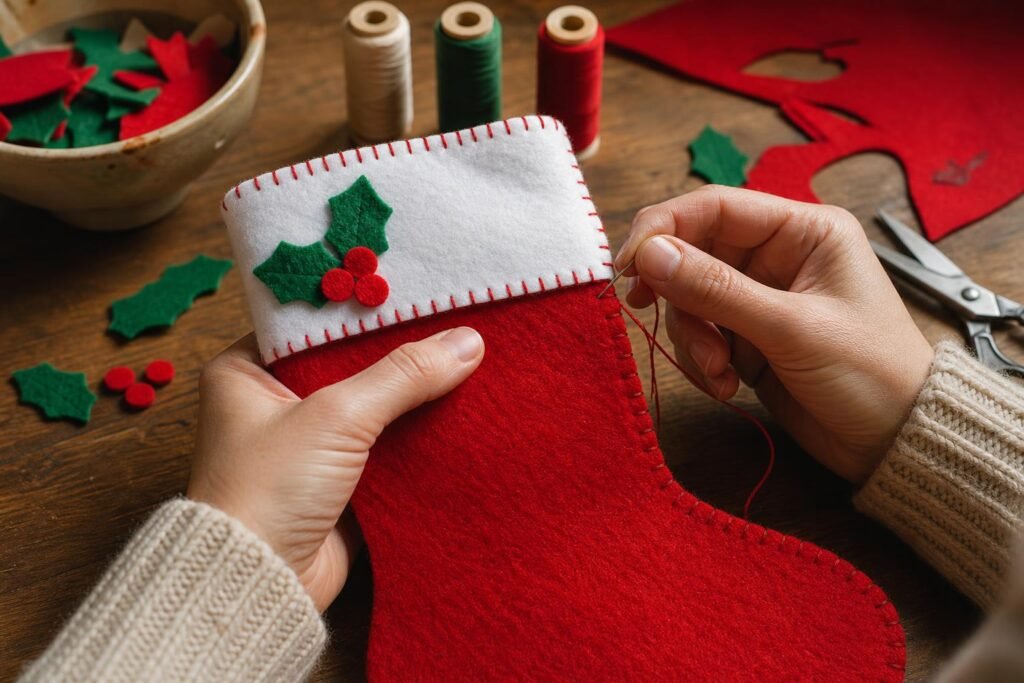
Cut two stocking shapes from wool blend felt, add a contrasting cuff and stitch the edges with blanket stitch, or use fabric glue for a no-sew version. Embroider or appliqué a name on each cuff. A matching set for the whole household is one of the most meaningful handmade Christmas decoration projects you can make.
2. Fabric Advent Calendar
Sew or glue 24 small felt pockets onto a large rectangle of linen or canvas, number each pocket and hang the whole thing from a wooden dowel. Fill the pockets with sweets, notes or small activities. It becomes part of your family's December routine.
3. Embroidery Hoop Wall Hanging
Stretch festive fabric or stitch a simple winter scene inside a large embroidery hoop. Hang several hoops in different sizes on a wall for a soft, textured display.
4. Felt Tree Skirt
Cut a large circle of felt with a slit to the centre and decorate the edge with felt stars, scallops or pom-poms. A handmade tree skirt finishes the tree beautifully and hides plastic stands.
5. Wooden Star Tree Topper
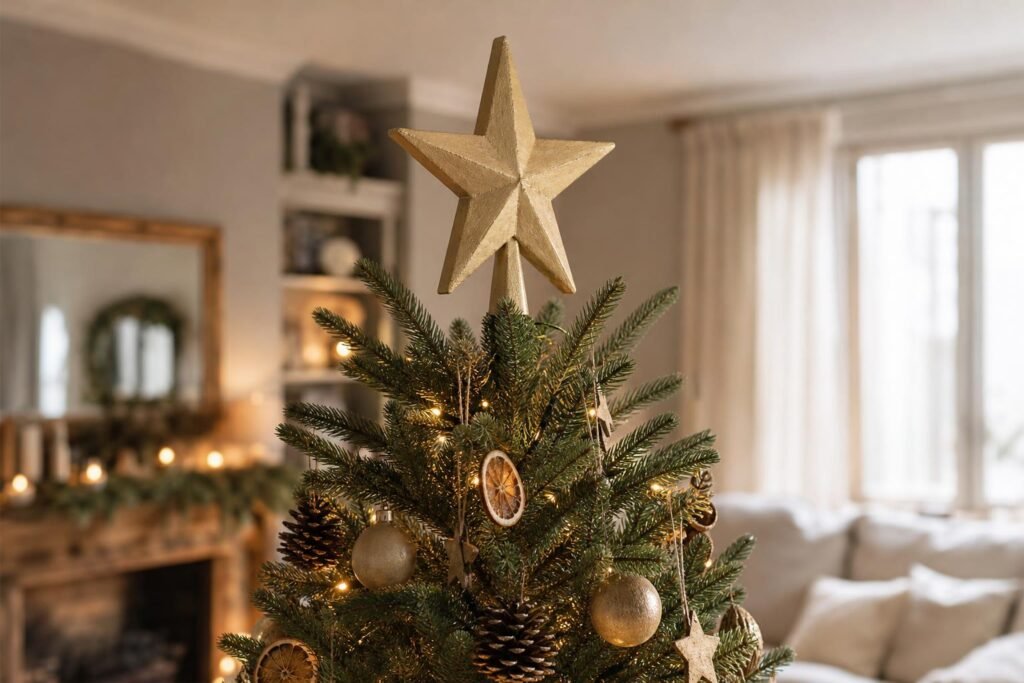
Cut a star from thin plywood or balsa, sand the edges smooth and paint it gold or white. Attach a spring or cardboard cone to the back so it sits securely on the top branch.
6. Clay Nativity or Village Scene
Shape simple houses, trees or nativity figures from air dry clay, keeping forms chunky and minimal. Paint them in muted tones and display them on a shelf with a little faux snow. Our guide to air dry clay vs polymer clay will help you choose the right material.
7. Woven Wall Hanging
Weave a small wall hanging with cream, green and red yarn on a simple cardboard loom, then hang it from a wooden dowel. Add tassels at the bottom for movement.
8. Knitted or Crochet Garland
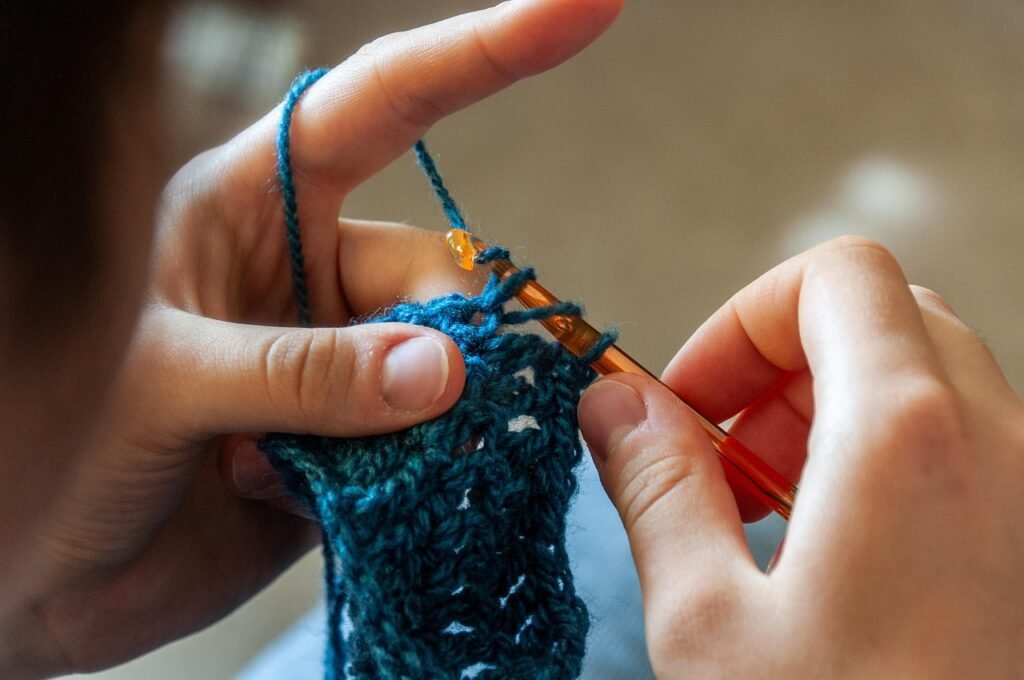
Knit or crochet a chain of small stars, hearts or bobbles and string them along the mantel. It is a portable project you can work on in front of the TV.
9. Patchwork Christmas Cushions
Stitch together squares of tartan, gingham and plain cotton to make cushion covers for the season. They brighten a sofa or window seat and pack away flat.
10. Hand-Painted Glass Baubles
Use enamel or glass paints to decorate plain baubles with dots, stripes or initials. Add the year on the base so every bauble marks a Christmas.
11. Dried Flower Wreath
Wire dried hydrangea, lavender, statice and grasses onto a small ring for a wreath that lasts indefinitely. It works year after year with only a fresh ribbon.
12. Family Keepsake Ornaments
Press a child's handprint, a pet's paw print or a meaningful leaf into clay, add the year and seal it. Few things are more precious than a handmade Christmas decoration with a story behind it.
-
Make a template
Draw a stocking shape about 45 cm tall on paper and cut it out.
-
Cut two pieces
Pin the template to folded felt and cut out a front and back.
-
Glue the edges
Run a thin line of fabric glue around the edge, leaving the top open, and press firmly.
-
Add a cuff
Fold a strip of contrasting felt over the top edge and glue it in place.
-
Personalise
Cut letters from felt or use fabric paint to add a name, then glue on a ribbon loop for hanging.
Supplies for a Handmade Christmas Decoration Collection
These four supplies will carry you through most of the heirloom projects above.
| Best for | Skill level | Our score | ||
|---|---|---|---|---|

Wool Felt Sheets
Best for textiles
|
Stockings, appliqué | Beginner | 9/10 | Check price |

Mini Hoops
Best for hoop art
|
Ornaments, wall art | Beginner | 8.8/10 | Check price |

Wooden Dowels
Best for hangings
|
Wall hangings, banners | Beginner | 8.5/10 | Check price |

Fabric Glue
Best no-sew option
|
Felt, fabric, ribbon | None needed | 8.7/10 | Check price |
Wool blend felt is soft, holds its shape and does not fray, making it ideal for stockings and tree skirts. Mini embroidery hoops turn small stitched designs into ornaments or wall art. Wooden dowels give hanging advent calendars and wall hangings a neat finish, and permanent fabric glue means you can make most textile projects without a sewing machine.
Caring for Your Handmade Decorations
Store carefully. Wrap textile pieces in acid-free tissue or a cotton pillowcase and keep them somewhere dry. Avoid plastic bags for wool, which can trap moisture.
Seal clay and wood. A coat of matte varnish protects painted clay and wood from moisture and handling. Our guide to sealing clay creations explains the best approach.
Add something new each year. One of the loveliest traditions is to make a new handmade Christmas decoration every December, so your collection grows with your family. Over time the box becomes a record of your life.
Label and date. Write the year on the back or base of each piece. Future you will be glad you did.
Set aside one evening every December to make a new decoration together, whether it is a stocking for a new family member or a single clay ornament with the year on it.
Choosing Materials for a Handmade Christmas Decoration
The material you choose shapes how a handmade Christmas decoration looks, feels and lasts. Here is a quick guide to the most popular options.
Felt. Wool or wool blend felt is the friendliest material for beginners. It does not fray, so edges can be left raw, and it comes in rich festive colours. Pure acrylic craft felt is cheaper but pills and stretches more quickly, so for heirloom pieces it is worth paying a little extra for a wool blend.
Wood. Plywood, balsa and wooden blanks are ideal for tree toppers, ornaments and village scenes. Sand edges smoothly, seal with varnish and they will last for decades. Pre-cut wooden shapes from craft shops save time if you do not own a saw.
Clay. Air dry clay is easy and needs no oven, while polymer clay is stronger and more detailed. Both suit ornaments, figures and keepsakes. Seal finished pieces to protect them from moisture.
Fabric. Cotton, linen and tartan wool are perfect for cushion covers, bunting, advent calendars and stockings. Pre-wash cotton before sewing so it does not shrink later.
Yarn. Knitting and crochet produce wonderfully tactile decorations, from tiny jumpers to garlands of stars. Wool and cotton yarns give the crispest stitch definition.
Finding Time for Slow Projects
Heirloom pieces take longer than quick paper crafts, so plan ahead. Start bigger projects like advent calendars and stockings in October or early November, so they are ready by 1 December. Smaller items such as keepsake ornaments can be made right up to Christmas Eve.
Break each project into small sessions. Cut all your pieces in one evening, stitch or glue the next and add details on a third. Short, focused sessions are more enjoyable than a single marathon and lead to neater results.
Keep a portable project on the go. A small embroidery hoop or a crochet garland fits in a bag and turns a commute, lunch break or evening on the sofa into crafting time. Over a few weeks, those short sessions add up to a beautiful handmade Christmas decoration you can be proud of.
Finally, be kind to yourself. Uneven stitches and slightly wonky stars are part of the charm. Years from now, those small imperfections will be the details that make you smile.
Displaying Your Handmade Christmas Decoration Pieces
How you display handmade pieces matters as much as how you make them. Group similar items together so they read as a collection: a row of stockings across the mantel, a cluster of hoops on one wall or a little clay village on a single shelf. Scattering pieces around the room can make them feel lost.
Give special pieces breathing space. A beautifully stitched advent calendar deserves its own wall rather than being squeezed between photos. A wooden tree topper looks best when the ornaments below are simple and the lights are warm white.
Use natural backdrops. Greenery, wood and linen let handmade textures shine, while busy patterned wallpaper or strong colours can compete with them. A plain wall, a wooden shelf or a simple garland is often the perfect setting.
Rotate your collection. If you make a lot over the years, you do not have to display everything every Christmas. Choose a theme each year, such as all the felt pieces or all the clay decorations, and keep the rest safely stored. It keeps your home feeling fresh and makes each handmade Christmas decoration feel special when it returns.
Sharing the Making
Some of the most cherished decorations are those made by more than one pair of hands. Invite friends or family to add a stitch to a shared advent calendar, sign the back of a tree skirt or make one ornament each for a group garland. These shared pieces carry the memory of who was there and become more meaningful with every year.
Mixing Handmade and Shop-Bought
You do not need to make everything. A few carefully chosen handmade pieces paired with simple bought basics, such as plain glass baubles or white lights, look balanced and calm. Let the handmade Christmas decoration pieces take centre stage and keep the rest understated.
For quick additions that fill gaps on the tree, our guide to DIY Christmas decoration ideas has fast projects for every room. And for more background on the tradition, the history of the Christmas stocking is a charming read.
Common Mistakes with Heirloom Projects
Choosing cheap materials for pieces you want to keep is the most common regret. Thin acrylic felt pills, cheap glue yellows and unsealed clay absorbs moisture. For anything you want to last, invest a little more in good felt, quality fabric glue and a proper varnish.
Another mistake is skipping a test piece. Before stitching a name onto a stocking or painting a bauble, try the technique on a scrap. It takes five minutes and saves hours of unpicking.
Finally, avoid storing decorations in damp lofts or garages. Moisture warps wood, softens clay and encourages moths in wool. A cool, dry cupboard inside the house is the best place for any handmade Christmas decoration you treasure.
Gifting Handmade Decorations
A handmade Christmas decoration makes a thoughtful present, especially for new homeowners, newlyweds or a new baby's first Christmas. Personalise it with a name and year, wrap it in tissue and include a short note explaining how it was made. It is a gift that comes out every December and is remembered every time.
Handmade Christmas Decoration Ideas: Frequently Asked Questions
What is the easiest handmade Christmas decoration to start with?
A no-sew felt stocking or a set of clay keepsake ornaments. Both need minimal tools and very little experience.
What materials last longest for handmade decorations?
Wool felt, wood, sealed air dry or polymer clay and glass all last for many years if stored somewhere dry.
How long does a fabric advent calendar take to make?
Around four to six hours with glue, or a weekend if you sew and embroider the numbers by hand.
How do I store handmade decorations safely?
Wrap them in tissue paper, store fragile pieces in egg boxes or compartment boxes and keep them in a dry, cool cupboard rather than a damp loft.
Final Thoughts
Every handmade Christmas decoration you make adds a little more meaning to your home. Stockings, advent calendars, tree toppers and keepsake ornaments become part of your family story and get better with every year they come out of the box.
Choose durable materials, add personal touches and make one new piece each December, and you will build a collection that no shop could sell you.